If you’ve done any fishing on electric boats you already know that doing so is a tremendous pleasure, as is shutting off the outboard and fishing with an electric trolling motor doing all the combustion-free work. There’s no growling engine noise, harsh vibrations, or exhaust to breathe, and as long as the batteries have power their reliability is downright magnificent. Those are the upsides. But there are bound to be downsides, too. And in the grand scheme of things, when it comes to electricity as the primary power source the tech is quite new. It’s constantly changing and the options are limited, so anything you buy today may well be considered archaic in a couple of seasons. At this point in time, should you even consider electric boats for fishing?
Electric Boats Versus Electric Outboards
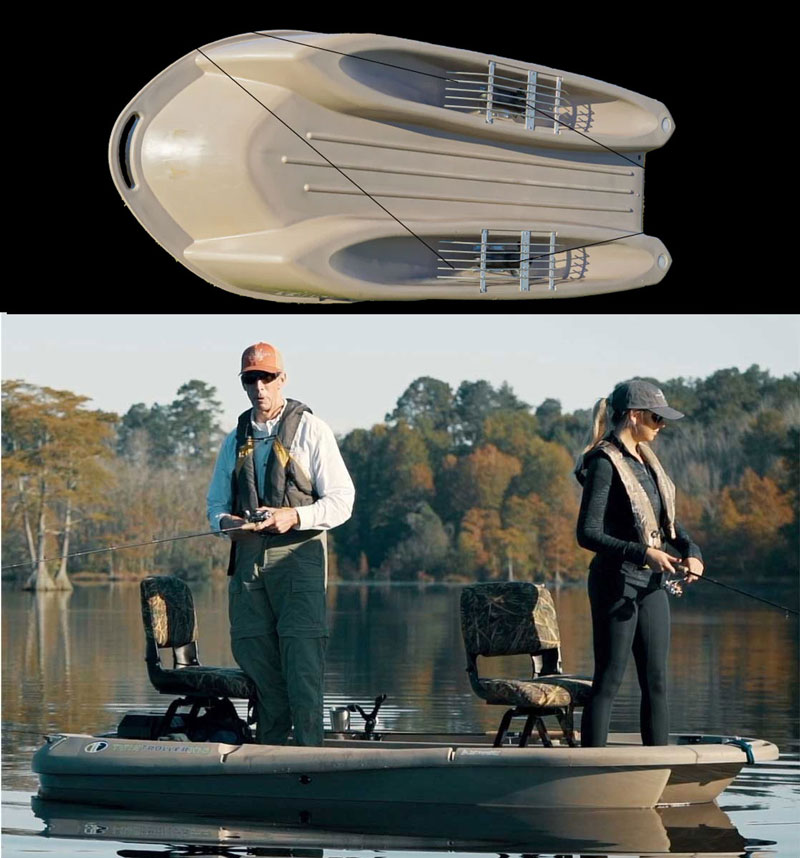
The first thing to note is that even using the term “electric boat” is a bit of a misnomer. There are very, very few fishing boats (or boats in general for that matter) that are designed from the ground up for electric power. There’s the X Shore lineup, which includes a 26’ long straight-inboard center console. There’s a handful of very small boats, like the 10’ Freedom Electric Marine Twin Troller (above). And there are several concept-stage boats like the Lurion iOn21 electric bass boat, which have yet to be proven in real-world use. But the vast majority of the fishing machines being marketed as electric boats are really models designed for gas power which have been adapted or tweaked in minor ways to accommodate electricity.
Electric outboards, on the other hand, are becoming more and more common. At this point most anglers have heard of Torqeedo, ePropulsion, and Elco, and industry powerhouse Mercury Marine jumped into the fray a few years ago with their Avator line. Most are relatively small at 15 or fewer horsepower, but Torqeedo’s offerings do go up to 80-hp and there are options from lesser-known players clear up to 300-hp (in the form of the Evoy Storm).
While the design of a boat built for gasoline outboards may not be ideal for an electric outboard, truth be told it’s pretty darn close. Bolt on the powerplant and the only thing left to worry about is trading out the fuel tank for batteries, right? Pretty much, but…
The Fatal Flaw of Electric Boats
The biggest drawback to electric boats remains the same as it’s always been: limited range. Boats don’t have wheels, and they require a lot more power than cars do to move at cruising speeds. They don’t enjoy the benefits of regenerative braking (when energy is recaptured and fed to the battery by a car as it brakes). And they certainly don’t get to coast downhill. As a result, an electric boat needs gobs of juice

Batteries, meanwhile—even the latest and greatest LiFePO4 batteries—pack a meager punch when compared to fossil fuels. Burning that dinosaur juice we get around 65 times as much energy density as high-end lithium batteries can provide. That’s not problematic when you’re powering a 36-volt electric bow-mount to creep through the shallows and Spot-Lock all day long, but when the task is fire-hosing 800 volts to 300 horsepower as you keep a 25-foot center console on plane, all that energy gets burned up fast. Really fast, and planing electric boats generally get just a few dozen miles of range when running at the speeds we’re used to enjoying on our gas hogs.
If you only plan on making short runs and plugging in between uses, an electric boat might fit the bill and any angler would find it a superior experience as opposed to using internal combustion to get from Point A to Point B. But if you plan on running out into the Bay and fishing all day? Forgeddaboudit.
Electric Fishing Boats that Work
Considering all of the above, why even bother talking about electric fishing boats at this point in time? Because for those of us who will be fishing tributaries, reservoirs, or enclosed bodies of water on a small boat, opting for an electric outboard could be an excellent move. With boats that don’t need to plane and don’t need to travel farther than 20 or so miles in a day of fishing, those smaller motors can more than get the job done. A three-horse electric with an integrated LiFePO4 battery on a 12’ Jon boat will get you close to 10 miles of range at full-tilt speeds of six or so mph; around 20 miles of range at four mph; and over 50 miles trolling around at a crawl of two and a half mph. Battery weight for this sort of capacity is around 20 pounds, so it’s easy enough to double these figures even on a small boat by grabbing a second battery.
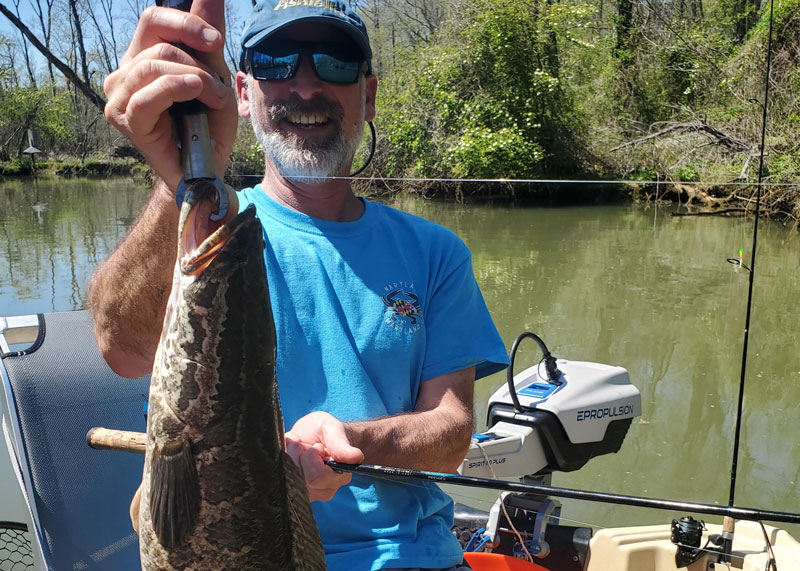
A critical factor to consider if you’re thinking about getting a small electric outboard is the battery system. Most modern manufacturers (including all we mentioned earlier except for Elco) offer outboards up to five or so hp with a purpose-built, clip-on or drop-in battery. While going this route does eliminate the possibility of hooking up to additional external power sources, it makes for a clean, easy-to-use, portable package, with no external connections or additional battery storage needed. If you’re on the fence between five horses or six, this factor is a strong argument in favor of the smaller powerplant.
The Cost of Electric Boats and Electric Outboards
Wait a sec, we know what you’re thinking—it has to cost more to go with an electric boat, right?! Well, yes. In the case of large boats with big motors and uber-potent battery banks, it can cost a LOT more. That 300-hp Evoy is advertised at around $80K, which is more than double the cost of a gasoline powerplant in the same size range. But the motors themselves aren’t even what creates the biggest dent in your bank account, because the cost of batteries can be downright shocking. A quad 63 kWh battery bank that gets you a hair under 30 miles of range and a charger pushes frighteningly close to the $200K mark.
The cost differential shrinks the smaller you get. A gasoline three-horse, for example, will cost around $1200, while an electric in that size range goes for a little over twice as much including a battery. Again, most of the cost is in the battery rather than the motor itself; spare batteries for these motors generally go for $1000 or more.
True, you’ll never have to buy gas for that outboard, but it will take a lot of fishing time to recoup the investment. Then again, that’s not what fishing from an electric boat is all about. And don’t worry, we’re not about to get all tree-hugger on you or anything. While we applaud the idea of reducing that carbon footprint, we’d never ask an angler to sacrifice his or her fishing prowess to make it happen. The real motivator here is having a better day of fishing out on the water, and electric motors do make that a reality. I’ve been running my pond-hopper on a three-horse ePropulsion for close to five years, and I’ll never buy a gasoline eggbeater for a boat 14’ or smaller again. It’s just too darn pleasant to cruise down the river in silence, maneuver the boat without having to crank or yank, and fuel up by walking in the house and plugging in the battery.
Back to the original question: should you even consider electric boats for fishing? In the case of small boats used on small waterways, the answer is an emphatic heck yes. In the case of slightly larger boats, a cautious maybe. And in the case of full-sized Bay-worthy fishing machines, a plain and simple nope. At least, not yet.