Jigging for suspended fish is tough enough, but when the fish go really deep getting a lure down to ‘em can become challenging—and jigging spoons can save the day. With a super-fast sink and fish-attracting flash they’re ready-made to jiggle and dart 30’, 40’, or even deeper down below.
What Are Jigging Spoons?
For a beginner this is perhaps the most important question to ask, because there are a number of different types of spoons and if you try jigging deep with a wobbling spoon designed for trolling or retrieving in shallow water, you’ll wonder why you can never reach bottom.
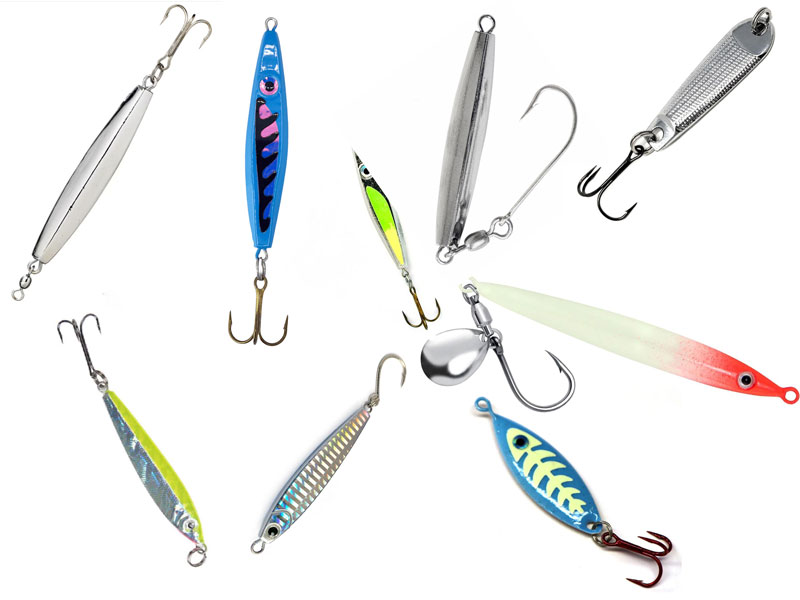
Jigging spoons are dense and thick, maximizing weight. They also tend to be more bullet-shaped than most other types of spoons so they sink as fast as possible. Wobblers, on the other hand, are usually thin and some are almost shell-like in nature. They also usually have a broader profile and/or more of an oval shape.
You’ll see jigging spoons in every imaginable size, color, and finish. Some have a hook dressed with a feather and others have plain hooks. And you’ll also see a mix of single hooks and treble hooks. Remember that you won’t miss many more fish by using a single hook, and especially in catch-and-release fisheries, using trebles will harm a lot of fish. They’ll harm you, too, if you get one of those trebles in your hand. So as a general rule of thumb it’s best to stick with singles and/or swap out trebles for single hooks.
When to Fish Jigging Spoons
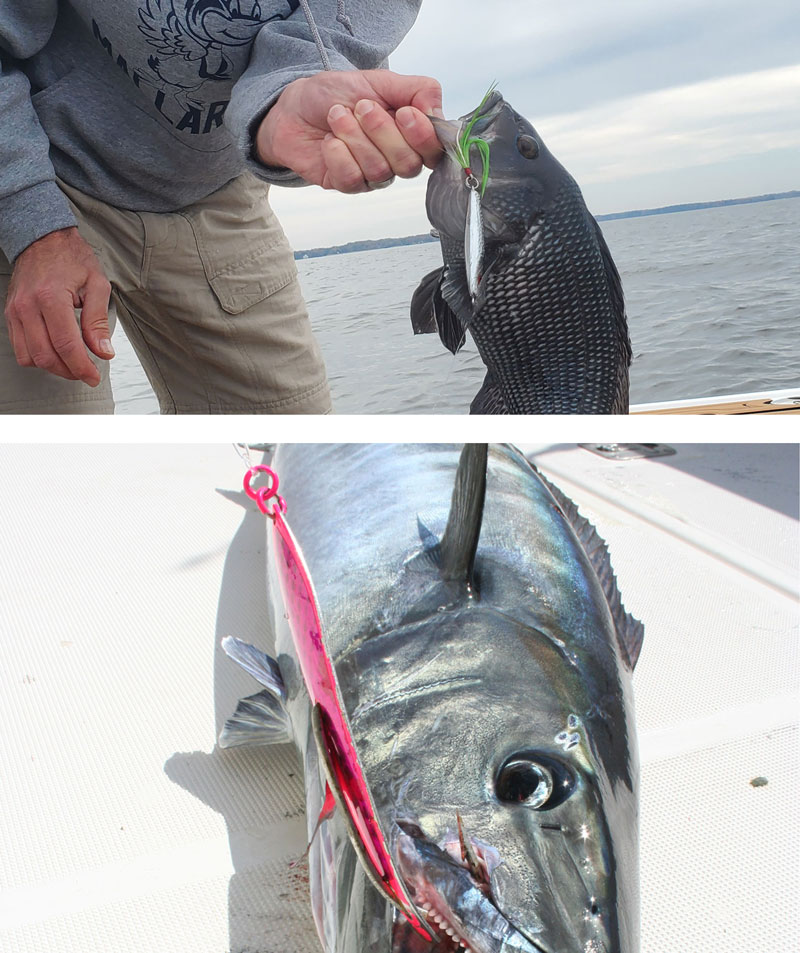
Unlike most aspects of fishing, there’s actually a simple and straightforward answer to this question: when the fish go deep. With a one-ounce jigging spoon you can jig clear down to 100’ if the wind and current are cooperative, and down to 30’ or so in most conditions. With a two-ounce jigging spoon you can hold bottom in 50’ even on a breezy day and when it’s calm out you can drop it down just as far as your line capacity allows.
To use an example that just about everyone within FishTalk’s area of coverage can relate to, that makes jigging spoons ideal for catching striped bass in the colder months of the year when they often prowl along bottom in depths of 40’ or 45’. These fish might chase bait to the surface during brief bursts of action, but often spend the bulk of the day hunkered down near bottom. Getting an offering down to them and keeping it down there can be tough, but jigging spoons will often do the trick.
But don’t think that this is the only type of time or place they come into play. When largemouth bass go deep in reservoirs during the heat of summer jigging spoons can reach them and trigger attacks, and small jigging spoons are deadly on white perch when they school up in deep water. There’s also one very different scenario where jigging spoons become an asset: when toothy critters like bluefish or Spanish mackerel are breaking water, jigging spoons can be a good choice because they’re bite-proof and can be cast a country mile. In this case, however, rather than jig them deep the move is to cast them out and rip them back at high speeds before they have a chance to sink.
How to Fish Jigging Spoons
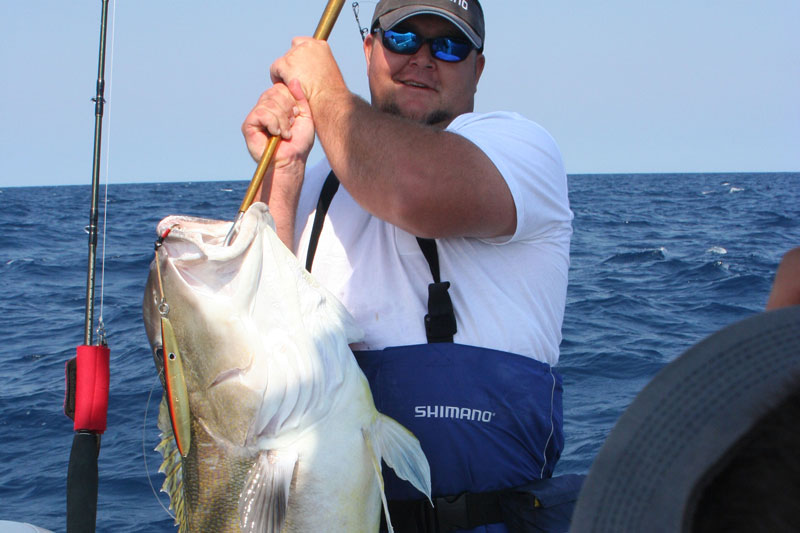
That one exception noted, most of the time you’ll want to fish a jigging spoon vertically. Drop it to the depth of the fish or to bottom, then sweep your tip up and immediately drop it back down. Match the speed you drop the rod tip with the speed the jig sinks, so you allow the spoon to fall as naturally as possible while maintaining minimal tension so you can feel the bites.
Often you’ll feel the fish smack the lure, but sometimes you won’t. A clue to watch for is when you’re bouncing the spoon on bottom, and it seems to hit bottom earlier than it should. Let’s say you’re sweeping the tip up to one o’clock and the jigging spoon is hitting bottom when your rod tip drops back down to five o’clock. But this particular time it hits bottom when your rod tip is at three o’clock—set the hook ASAP, that means a fish has grabbed the lure.
Sometimes sweeping the rod slower will help, and other times using a rather fast and aggressive motion does the trick. If the fish are hugging bottom it might be best to keep the sweeps short, but if they’re at mid-depth it can help to sweep that rod as high as possible and let the tip fall until it touches the water, so you cover the widest depth range possible. As is always the case when fishing, try doing it differently until you figure out what will work on any given day. But whatever the day of fishing may bring, make sure you have some jigging spoons in that tacklebox before heading out for the hotspot.