It’s cool to see an old boat you’ve known for many years take on a new life. Not just a facelift, but a retrofit that unlocks new angling opportunities for seasons to come. This is what we achieved with a recent project. We took an aluminum boat designed for one thing and—with some foundation work and key additions of new technology—turned it into something new. Specifically, we took a vintage 1990 Western 14’ aluminum skiff that spent its first three decades trolling mountain lakes, and turned it into a pocket bass boat destined for red-hot bass fishing action on Lake Casitas.
The journey started when my fishing buddy Butch bought the boat from my brother Steve. Your ultra-basic tin skiff, she featured an electric start 15-hp Tohatsu tiller-steered outboard, two full-width bench seats, and up front, a basic Minn Kota 12-volt 55-lb. thrust trolling motor with a foot pedal control. We used it to troll various trout lures at slow speeds. We couldn’t, however, help casting envious stares towards those sparkly tournament bass boats nearby, all using their high-tech electronics and Spot-Lock GPS anchoring to stay perfectly positioned off points and drop-offs and hover over schools of suspended bass feeding on shad.
This started discussions about how we might modify the boat to make it a more effective bass rig. We’d never be able to race across the lake at 70 mph or neatly store a dozen or more rigged outfits in under-deck rod lockers. But perhaps we could maneuver along the shoreline better and—most importantly—use Spot-Lock to hold our position over structure and fish when the need arose.
The afternoon breeze at Lake Casitas often has a way of invigorating the bite after a typical mid-morning lull. Unfortunately, it also makes it harder for us to fish our Carolina-rigged plastic worms, drop-shot flukes, and other vertical techniques that are so deadly off deep-water points and ledges. Trying to fish this way from a boat being pushed around by the wind is ineffective and ends up in snags and lost gear. For this reason, the number one priority for this refit project was to add the Spot-Lock capability.
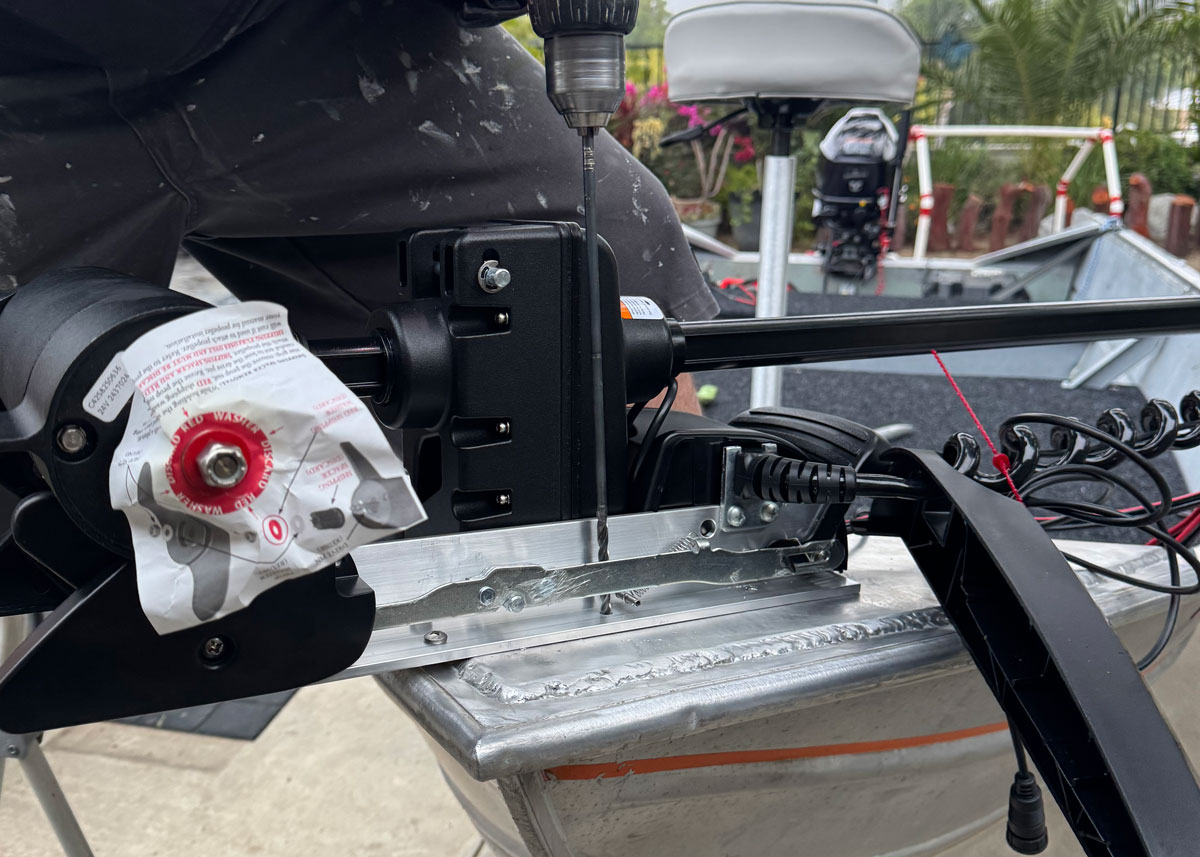
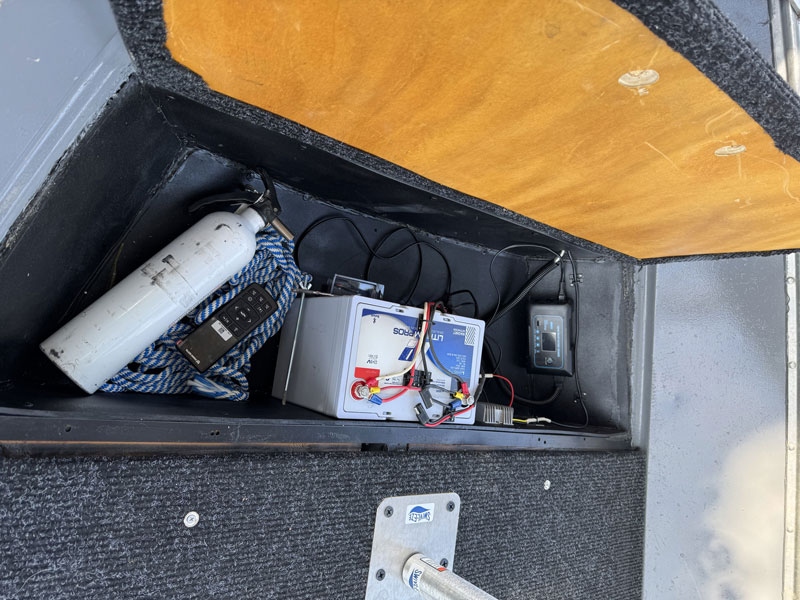
It wouldn’t be a matter of simply buying a trolling motor with this feature and bolting it on, however. Several modifications would have to be made first. For this lightweight boat, we knew the most basic Spot-Lock capable trolling motor would have more than enough thrust to maneuver and hold position in the wind. This led us to the 45” shaft Minn Kota Terrova 80-pound-thrust trolling motor, the most affordable option. But that would require a 24-volt system to power it. A serendipitous meeting with Lithium Pros during the 2025 International Boatbuilders Exposition & Conference (IBEX) helped us decide on a Lithium Pros 24-Volt, 65 amp-hour LiFePO4 battery that would fit within the space under the bow seat.
The existing trolling motor was already overhanging the small triangular aluminum pad at the boat’s bow, so creating room for the larger footprint of the Terrova would require some modification. The decision was made to cut out the existing pad and, using a TIG welder, replace it with a triangular piece of quarter-inch aluminum roughly twice the size. This would provide additional mounting space and strength to accommodate the larger footprint of the Terrova, as well as its increased weight and torque.
We could have hooked everything up and stopped there, but what fun would that be? Now that the old girl would have the same position-holding capabilities as the real bass boats, what other tweaks could make her even better? The boat always seemed a little loose and rattly. Whenever we opened up the 15-hp outboard the hull vibrated in protest and with each impact off a wave, you felt the bench seats shift slightly under your weight. To address this, we firmed up many of the internal weld points and added new ones, then installed new heavier marine plywood and carpet on the cockpit floor and seat tops. A fresh coat of paint for the interior contributed even more to that “new-to-me” boat feeling.
This process led to another crazy idea: rather than stay with the existing bench seat/bow seat configuration, why not create a single platform running from the aft edge of the center bench to the bow? So, another deck of carpeted plywood was created for this purpose, with a low pedestal seat through-bolted to support a fisherman while he operates the trolling motor and/or casts. The aft bench seat would be used by the driver, while the second angler could sit at the aft edge of the forward platform when the boat was underway.
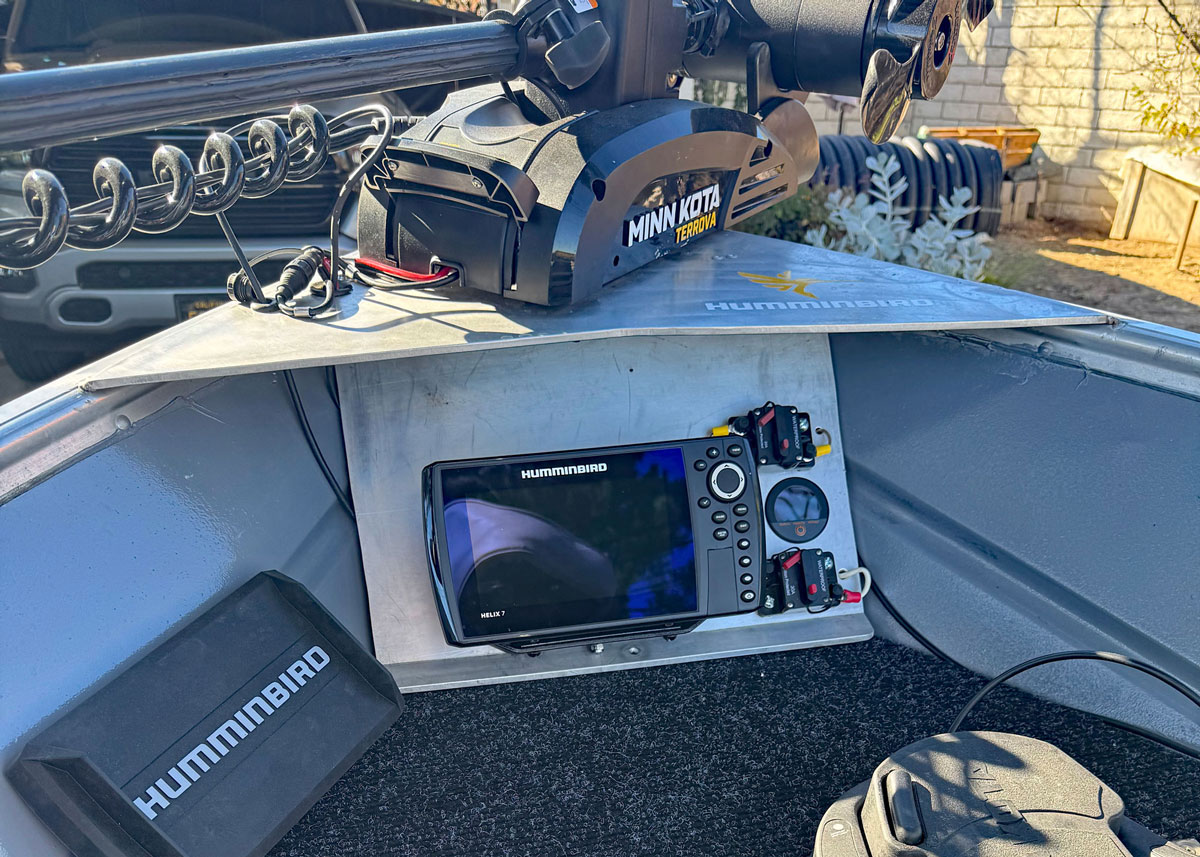
As they say on every TV infomercial, “but wait, there’s more!” Now that we had a bow platform and a Spot-Lock trolling motor, some more tech would inch us ever closer to true bass boat functionality. There was just enough space in the bow to mount a Humminbird Helix 7 CHIRP Mega DI GPS 64 sonar. We fabricated an aluminum “glove box” door that would accommodate the unit and yet swing up to provide a little extra stowage. We rounded out the additional tech by then adding a built-in battery charger, a 24V/12V convertor (to power the Humminbird), a digital battery gauge, and two On/Off main circuit breakers.
All told, the project took about 35 hours of actual work time when you combine cutting, fitting, and carpeting the wood decking; cutting, welding, and bending the aluminum; mounting and installing the trolling motor and electronics; and painting the interior to give it a fresh new look. Total cost was pushed close to $4000. I’m sure you’re asking yourself, “isn’t that a lot of money to spend on an old boat/motor/trailer purchased for $3000?” Of course—but it’s the result that matters, not the cost. As with any boat retrofit project, one thing kept adding to another and the scope of the job kept growing. We kept thinking, “this would be useful” and “why don’t we make this better?” We started out to just add a trolling motor, but you know how that goes.
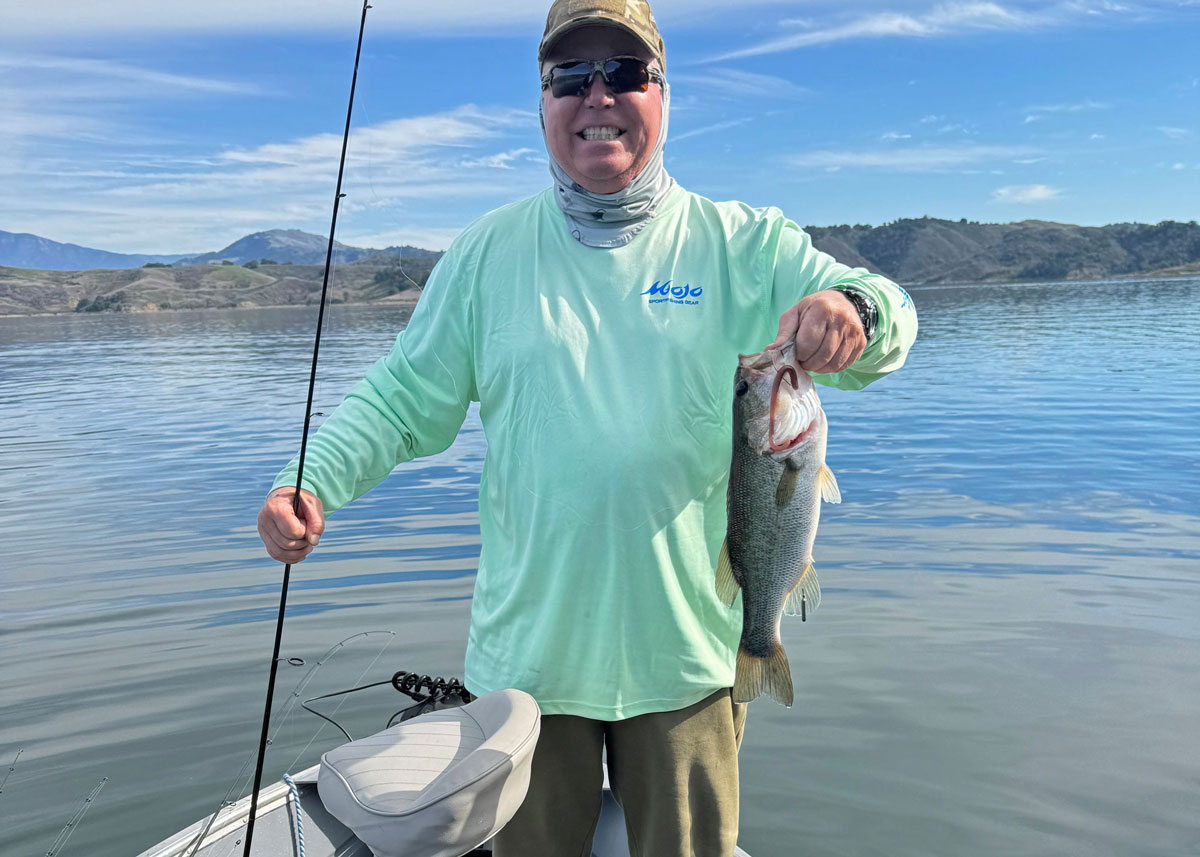
We’ve only logged one fishing trip since the project, but so far, the results have exceeded expectations. The 80-pound thrust Terrova is almost too powerful, and we’ve yet to exceed the lower end of the throttle settings to hold position. As this is a V-hull boat, you do need to move around thoughtfully and deliberately when up in the bow. Truthfully, it isn’t as bad as I worried it could be and the added weight and structural integrity of the plywood decking helps. We’re not sure how the boat might behave with only one angler onboard. Without the weight of a second person in the stern to counterbalance the load, I expect it may be necessary for a solo angler to fish and operate the trolling motor from the center of the boat.
We’ll probably get some stares from all the bass pros and weekend warriors on the lake. But given this old girl’s new capabilities, I like our chances to catch fish with the best of them.
-By Ron Ballanti