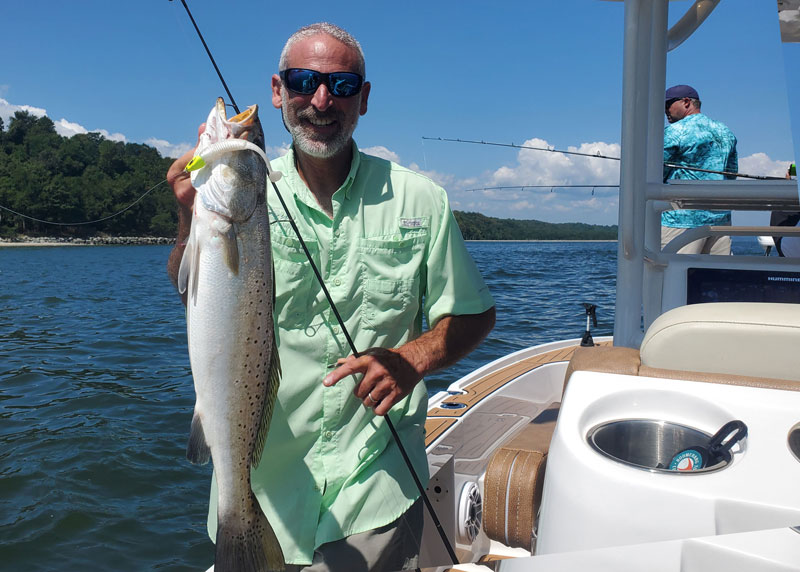
Countless Chesapeake Bay anglers who enjoy light tackle fishing in the shallows look forward to spring, when the speckled trout bite cranks up. Except in Virginia waters this year, of course, which have been closed for harvesting specks due to the significant winter stun we experienced last winter. Many anglers believe the closure was a good move, preventing the taking of any specks before they had a chance to spawn. Some will disagree. But all will likely be psyched to catch some specks when July arrives and the closure ends. There’s just one problem: by the time July arrives, the best fishing is long past. Most of the fish have abandoned the shallows as the water temps begin to peak for summer, and finding those speckled critters is a lot harder than it was a month or two ago. Harder—but not impossible.
The Heat of the Moment
Like many species, during the heat of summer specks are looking for places where they can cool off a bit. Shade, deep water, and moving water are all key features. Above all, however, is time of day. On blazing-hot summer days you probably want to mow your lawn early or late, not at noon when the big ball of fire in the sky will have you sweating buckets, right? Fish aren’t very different. They’ll move into the shallows for some breakfast very early, and they’ll return very late to look for some dinner, but avoid actively feeding in sun-drenched waters during the peak of the heat.
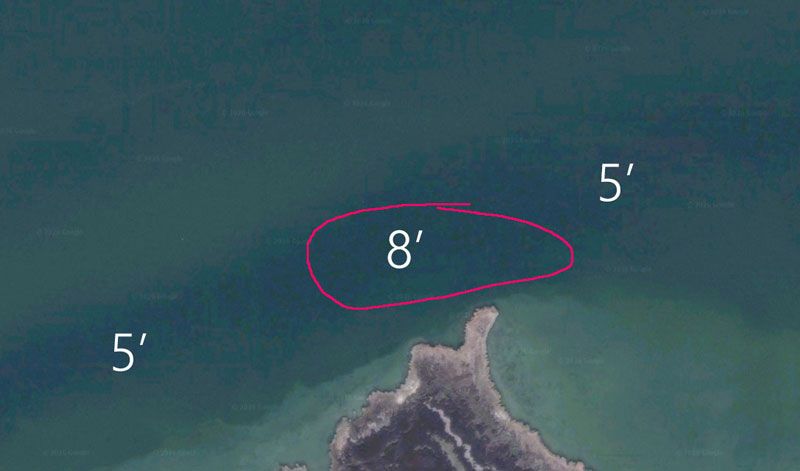
During midday hours it’s much, much harder to catch fish. But it’s not impossible. This is when shade, structure, and depth take over as key features. As the sun gets higher and higher in the sky more and more fish will shift away from the shallows and begin staging around nearby channel edges, points, riprap, and wrecks. Anywhere the water is moving gets bonus points. Often the best spots will be just a stone’s throw from the shallow water hotspots where you find fish early and late, but instead of being a foot or two deep they’re eight to 15’ deep.
Summer Speckled Trout Lures
As a general rule of thumb you’ll catch more specks if you downsize during the heat of summer. The five-inch plastics that were so effective a month or two ago will still get hit now and again, but not as much as a four-incher. Sometimes dropping all the way down to a 3.5” lure will work even better. But that makes our job harder, because we’re fishing in deeper waters with current present. Find a wreck sitting in 12’ or 15’ and it can get very difficult to find bottom with anything less than half an ounce, and if the water’s moving or there’s a breeze grabbing your line, you may need 3/4 of an ounce to feel confident finding bottom. Meanwhile, specks generally find a slower sink most attractive, so you don’t want to just tie on a big hunk of lead that sinks like a rock.
There are two ways to combat this issue. First, you can use compact but heavy jigheads with short shanks so they better fit the small plastics. Or second, you can tie on a tandem rig with a pair of smaller heads that deliver the weight you need when combined. (Those double-bucktails many folks up here call fluke rigs are commonly called speck rigs along the Gulf coast). Whichever route you go, remember that using a light-action rod with 10- or 12-pound braid spooled on a 3500 or smaller reel will work a lot better than a heavier rig, because it delivers the sensitivity you need to feel your offering touch down. TIP: Whites, yellows, and chartreuse are always good color picks, but there will be times when specks demolish bubblegum pink while ignoring everything else (except maybe Electric Chicken… which has bubblegum pink in it). If you’re planning to target specks, never leave home without it.
Speaking of the lure touching down: the moment it does, pop your rod tip to make it jump right back up, then allow the lure to fall again. When midsummer specks are deep, hopping your lure right along the bottom is usually the best way to trigger an attack.
Thus far 2026 may not have been the best season ever for speckled sea trout, but you know you want to get out there and catch a few. So grab your sunglasses and suntan lotion, load the cooler with ice, and head for your favorite shallow water hotspots. And then, go deep.