Recreational anglers have long blamed commercial fishermen for many fisheries ills. Commercial fishers look at vastly inflated MRIP catch numbers and point the finger squarely at recreational anglers. Well, mercy… I think management, however well intentioned, is way off with sea bass. Certainly not on purpose. Indeed, bad recreational catch estimates they are forced to use despite having no faith in the data’s truthfulness, and failing to understand how sex-changing (protogynous hermaphrodites) species like black sea bass respond to size limit management, led them astray long ago. The fix is simple, though it’s surely not going to be easily embraced.
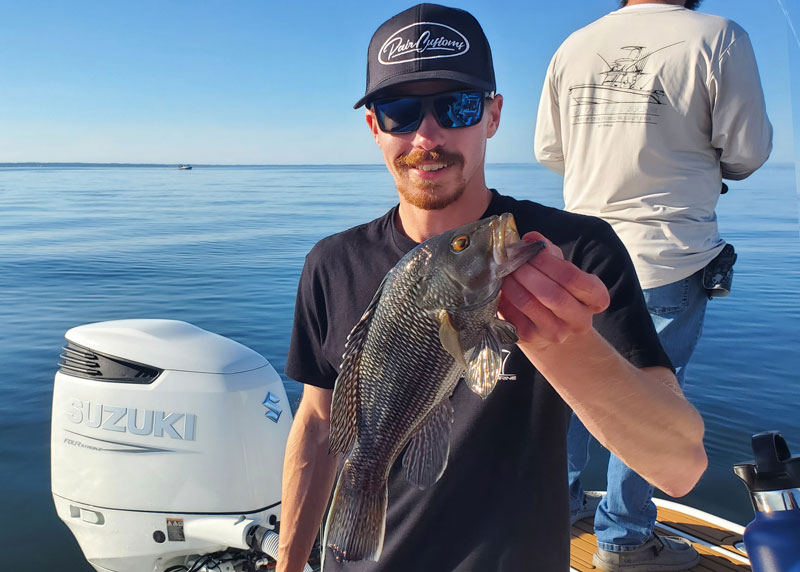
The damage from ever larger size limits is not subtle. I believe—can show—that with size limits above 11” one or two year-classes are removed from the spawning stock, many before they ever contribute. Because 70 percent or more of newly transitioned males are 12” to 13” in spring, summer growth will push them into the recreational size limit (they were already in commercial size limit at 11”). Many newly transitioned males are then taken just as they are entering their first spawn. That alone plausibly cuts the population’s lifetime spawning opportunity by roughly two-thirds.
In a nutshell: Larger size limits delay spawning and pack reefs with newly dominant males that are, or soon will be, legal to harvest. This reduces both spawning participation and juvenile access to habitat.
I've partyboat fished for sea bass for 46 years from Ocean City, MD. My anglers used to sometimes catch more sub-nine-inch sea bass in a single day than they now catch in an entire year. That’s not an estimate, it’s solidly in the data. Where on earth did all those fish disappear to? Management keeps trying to increase the population by raising size limits. This is standard operating procedure and works for many species, but because sea bass are forever tuned to a “King of the Hill” hierarchy, larger and larger size limits in sea bass have backfired in the worst way. The larger the size limit, the more reefs become tightly controlled by older male sea bass. Younger age classes are excluded from those reefs.
If you've ever watched David Attenborough’s work, you've almost certainly seen the clashes of males when it comes time for reproduction. Even in tiny frogs the lesser male is literally kicked off a blade of grass and the victor breeds successfully. It's everywhere in nature. And sea bass are well known for dominant males defending territory and spawning with multiple females in a harem-like structure.
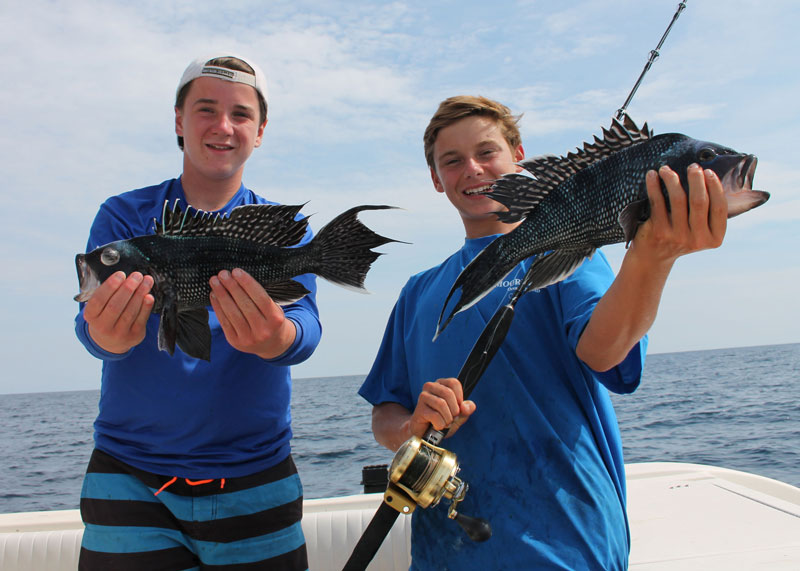
Without the sanctuary of reef habitat for age-one sea bass, and perhaps age two at times, we lose big parts of whole year-classes through increased predation. They become a snack for flounder, any number of different shark species, bluefish, monkfish, etc., instead of becoming a fish that will spawn several times and perhaps become one we can keep. There will always be plenty of predation on young sea bass. We don’t need to multiply it. Regulation is converting what should be our future catch and spawning stock into present day oceanic calories.
I believe filling every reef with 13” fish creates a chokepoint via natural mortality for age-one fish. Sea bass that would have been recruited if they had access to habitat where they could feed, avoid predation, and swiftly grow to maturity are nearly absent. Yet when we had an 11” size limit they were amazingly numerous. Today there are far fewer sea bass surviving year one at all.
In 2003 I wrote: “Our sea bass are at habitat capacity. The only way we can add more is by increasing habitat.” Mother Nature was about to show me she could take care of herself. From 2004 until 2016 our sea bass population basically trended down. In 2015 I wrote it was the worst spring run of sea bass in all history. I also predicted we’d see a swift rise from there owing to the MD Wind Energy Area event. That’s exactly what happened.
A huge experiment was conducted quite by accident from 2013 to 2023. I filmed many reefs in and around the MD Wind Energy Area (MD WEA) on the last day of August 2015. Three years of surveys using sub-bottom profilers had just stopped. We found no sea bass on reefs that should have been packed with thousands. None. The MD WEA, and at least four miles surrounding it (sound doesn't recognize permit boundaries), may as well have become Death Valley.
The fish didn’t die. Nothing did. So far as I could tell, sea bass, flounder and marine mammals simply moved away. All that vacant habitat, patches of natural reef and a few small wrecks spread through 525 square miles of noise-affected bottom, created the perfect large-scale experiment for what I’d long claimed about making small sea bass spawn.
Here’s what I predicted: “We'll see very small male sea bass in the MD WEA because there are no large males threatening.” That would be interesting. That would force a return to age-one all-hands-on-deck spawning.
Sea bass recolonized the wind area in 2016. Finding no competitors, no King of the Hill, many age-one nine-inch female sea bass switched to male and we saw what seemed an exponential population increase. Yet reefs inshore of the wind area saw no increase in population whatsoever. Aside from the brand-new artificial reefs, our inshore habitat seemed to continue downward in population. There’s the crux of it: manage sea bass to behave in this catastrophe spawning mode.
Fishing improved wonderfully into 2022. Now those reefs and all others are again up to a size limit population. Spawning is again diminished. Or, is it the habitat gap that really holds up larger population increases? Whichever or both—an 11” size limit would again ignite sea bass spawning production.
I fish the same variety of reef habitats as I always have. We use the same hooks and the same baits. If nine-inch sea bass were prolific, my clients would be cursing them. As anyone who reef fishes off DelMarVa will attest, we still have undersized throwbacks. With recruitment slowed, however, the population will slide slowly downward from 2023 until we test the 2015 low again. Given no large-scale habitat disruption or management action to rekindle recruitment, we'll slide past the 2015 low and go ever more slowly downward until a stasis is reached. That's not going to be the fishing legacy I intend to leave.
We've had a few lucky breaks over the years given the WEA recolonization and even a reduction in sea bass effort owing to a spike in summer flounder and then Covid restrictions, but I feel certain we will be discussing this very issue in just a few years. I’d far prefer to see it fixed beforehand. If managed for spawning production instead of reacting to statistics that fluctuate wildly, I believe that after a few years managers would have to increase commercial and recreational quotas to prevent sea bass stocks from crashing owing to an overuse of resources. There would be too many for the ocean to support.
Wouldn’t that be a switch.
-By Captain Monty Hawkins