Shad are an early arrival in Chesapeake tributaries, first arriving in the rivers when water temperatures rise over the 50-degree mark usually at some time in mid to late March. In some areas (Maryland and Potomac River Fisheries Commission waters) shad must be released, and in others (Virginia tributaries) hickory shad can be kept while American shad must be released. But in all of the Chesapeake’s waters anglers tend to agree on one thing: catching shad during the spring run is a ton of fun, and a great way to kick off the fishing season.

What are Shad Fish?
Shad come in two flavors in our waterways: hickory and American. Hickories generally run a pound or two and the first catches begin in mid to late March, increase in numbers in early to mid-April, and run through about the end of April or early May. Americans arrive slightly later than hickories and can get a lot bigger, sometimes pushing over five pounds. The most definitive way to differentiate between the species is to look at the jaw. With the mouth closed, the lower jaw protrudes well past the upper jaw in the case of hickory shad. On American shad the jaws are of about equal length.
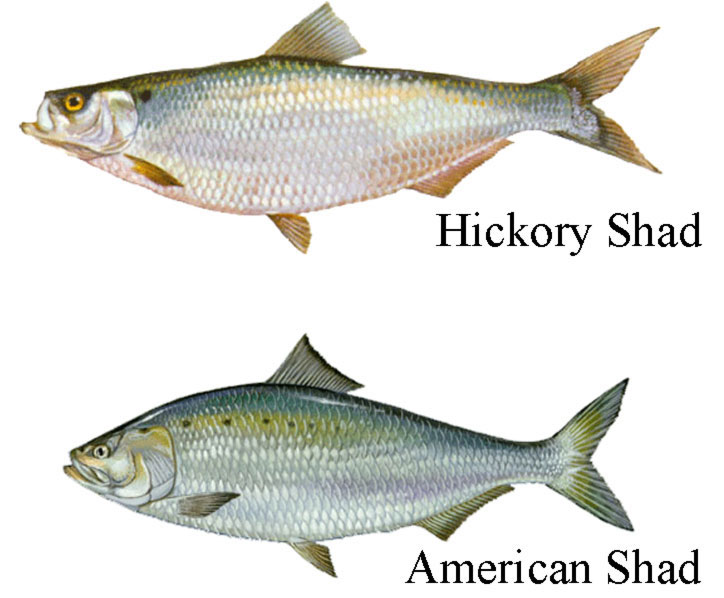
Shad are sometimes called “poor man’s tarpon” because they often leap and thrash like a tarpon on the end of the line. Most anglers feel that they fight like most fish twice their size. And one thing all anglers will agree on is that these fish can be exceptionally picky. It’s not uncommon for two anglers fishing side by side with different color or style lures to experience radically different results. And these fish can change their preference from one day to the next. On Saturday they may insist on pink and black darts, and on Sunday the bite might be limited to gold spoons—there’s just no telling. Which brings us to…
The Best Lures for Shad Fishing
Although we use shad darts for casting to countless different species these lures earned their name as the original offering for shad. Due to the shad’s unpredictable preferences shad anglers should carry a wide selection of darts with multiple colors and patterns in multiple sizes.
Small spoons are the second lure of choice for these fish. Tiny spoons, really, usually an inch or less long. Again, shad may hit one type of spoon one day and a different one the next, so you’ll want to keep a wide range of colors and finishes on hand.
To offer up multiple options at the same time most shad anglers will tie tandem rigs, often with a dart up top and a spoon on the bottom. That way, when you’re not getting strikes you can switch one, then the other, testing out different colors and sizes until you discover what the fish want on any given day.
The Best Gear for Shad Fishing
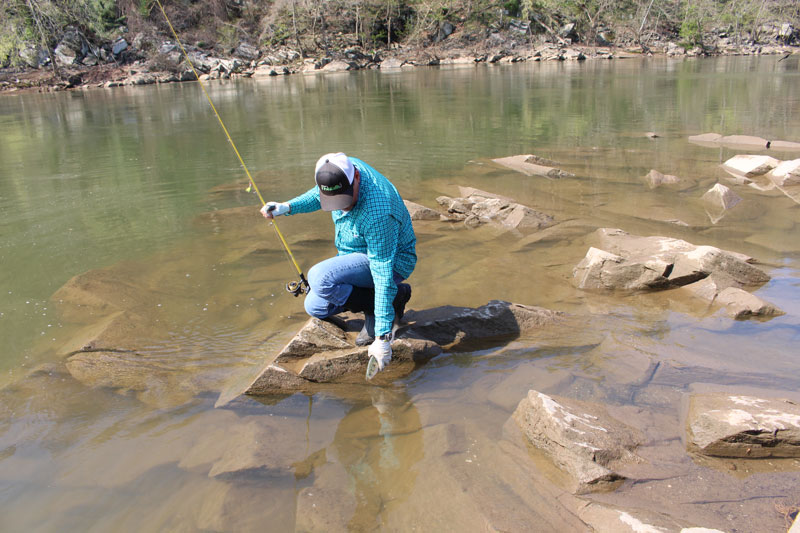
You can cast for shad with a wide range of rigs, and spinning or casting gear in the six- to 12-pound class usually fits the bill. Many anglers also enjoy casting fly fishing gear for shad, while using resin spoons or bead-eye streamers. When choosing your gear bear in mind where you’ll be fishing for them. In larger rivers with rocky shorelines or when fishing from a pier a longer rod will help you sail those darts and spoons far out from shore. But in smaller rivers and creeks if you’re fishing from shore a short rod is a better choice since you’ll be dealing with overhanging trees and branches.
The Best Places to Fish for Shad
Most of the significant Chesapeake tributaries have a run of shad to some degree, with larger tribs like the James, Potomac, and Susquehanna being the headline venues. Areas relatively close to the fall line, where the fish stack up prior to spawning, tend to be the hottest zones. In the James, for example, this would be near Richmond; on the Potomac it’s in Washington, DC; and in the Susquehanna and its offshoots it’s near the Conowingo Dam. There are also many smaller creeks and feeders—some small enough to easily cast across—that have excellent shad runs. Again, the best action will generally be within a few miles of where the tidal/non-tidal boundary is.
In small waters it’s usually not too difficult to locate the fish, but in the bigger rivers it can be more of a challenge. Here, you’ll want to scan the river’s surface and look for a seam in the current. These visible water barriers tend to congregate the fish, and are your best visual indication of where they’ll likely be staging. Whether you’re walking along the bank, paddling or pedaling a kayak, or motoring in a boat, move along until you see one of these seams then set up shop.
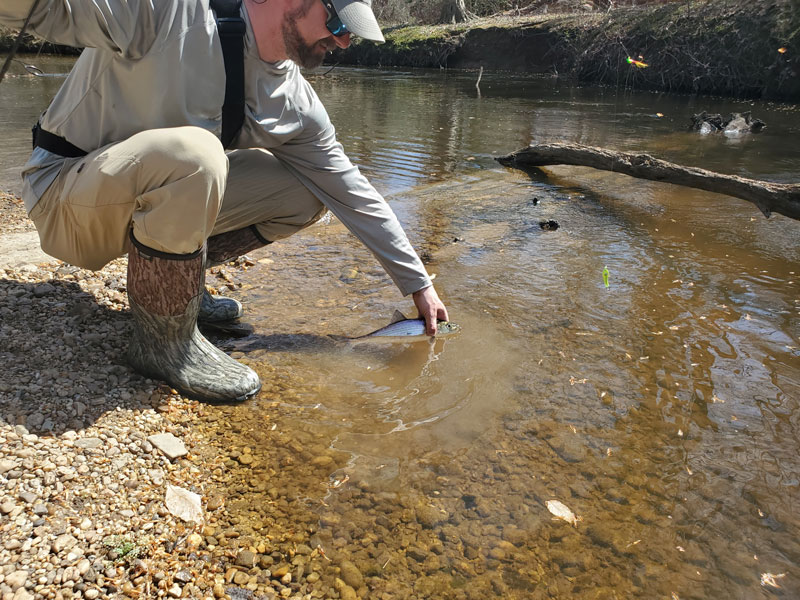
Next you’ll need to figure out what depth the fish are holding at. Cast out beyond the seam, allow the offering to sink for three to five seconds, then retrieve through the seam. On the next toss try a 10-count. Then try a 15-count, and so on, until the rig is reaching bottom before you begin the retrieve. When you get a strike, mimic the count you were using on the next few casts and see if you’ve nailed down the depth of the fish. Usually, the bulk of them will be staging at about the same depth.
By this point in the season many of us are thoroughly sick and tired of being bottled up indoors most of the time. We’re all waiting in anticipation for those warm spring days to heat up the angling action. And shad are a great way to get the season started with some fast and furious action. Load up on those darts and spoons, anglers!
Shad Fishing in Virginia
By Grayson McCormack
If you have a few spare hours and are sitting around the house with nothing to do, why not consider grabbing a rod and some shad darts and heading out for some shad fishing on one of Virginia’s many tidal rivers? Shad are one of the most fun freshwater fish to hook on light tackle due to their impressive leaps and strong fighting ability. It's no surprise that anglers line up on the banks and flood the tidal rivers of Virginia with boats in the spring to chase this fish. They are fun to target for both beginners and lifelong anglers.
Even though shad are born in freshwater, they spend most of their lives in saltwater. Each spring, they return to Virginia’s tidal rivers to spawn. Typically, the larger fish migrate upstream earlier, while the smaller fish follow slightly later. I’ll tell you some of the places to target shad in Virginia where I’ve had the most luck: the Rappahannock River around the fall line in Fredericksburg, the James River around the fall line in Richmond, the Chickahominy River below Walkers Dam, the Nottaway River, the Appomattox River, the Pamunkey River, and the Mattaponi River. In these rivers, the best shad fishing won’t be much past the fall lines, and likely in two to 15’ of water depending on where you are fishing.
Now, let’s look at your tackle. A lightweight five- or six-foot light action rod matched with a small spinning reel, spooled with six- to eight-pound monofilament line (I prefer six pound), will be the perfect combo. For lures, shad will take a variety. Some of the best are shad darts, small spoons, and crappie jigs; I feel crappie jigs are slightly superior. It’s a good idea to keep a variety of lures, colored jigs, and darts because some days the shad will bite red and green chartreuse and completely ignore it the next day.
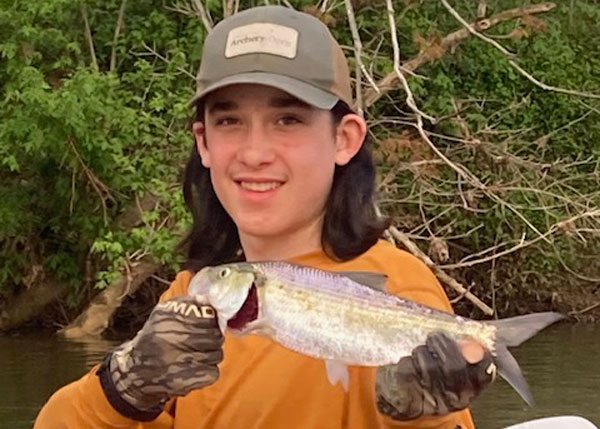
Your retrieving pattern can be just as important as the color lure you are using. I have had days when the shad will only bite my lure if I drag it on the bottom of the riverbed, and other days when the only way I can get a bite is by fishing my dart like a jerk bait. Changing up your retrieving pattern every five to 10 casts until you find what pattern is working that day is your best bet.
A canoe, kayak, or Jon boat could help you cover more water, but remember to bring a landing net if you go this route. Shad have a bad habit of dehooking themselves as you swing them into the boat. Most people release shad anyway, but if prepared properly shad can make a good meal. Some people eat the shad roe, others make shad cakes. Find a recipe you like and try it out—happy shad fishing!