After a long, tough stretch of winter fishing, the mouth of the Chesapeake is the first chunk of Bay Country to wake up for spring in a big angling way. Fifty is the magic number that makes it happen. When the water warms up and hits the 50-degree mark our options go from few to phenomenal, as resident fish start shaking off their winter slumber and migratory species first begin to arrive. We can’t predict exactly when in March the buoys will be reading 50 and in some years uncooperative weather can delay the event, but it will likely happen sometime during this month. And when it does these five angling opportunities will come alive.
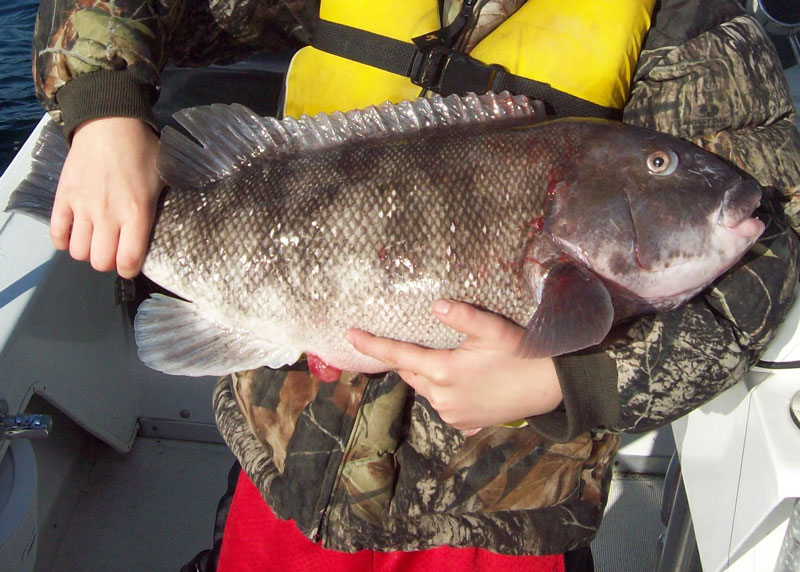
Tautog at the CBBT
Yes you can catch them when the water’s a bit cooler, but as it hits that 50-degree mark the tog will spring into action in a big way. Most of the bigger fish will be reeled in from the nearby oceanic hotspots like The Tower Reef, the Triangle Reef, and the wrecks off Cape Henry, but there will be plenty of fish including some nice ones close to home and in (at times) more protected waters at the bridge-tunnel complex. Kiptopeke and The Cell offer shots at ‘em, too.
Rig up a beefy rod with plenty of backbone—you’ll need to yank those fish away from the structure—and a Snafu, Carolina, or dropper loop rig with a 3/0 or 4/0 J-hook. Use crab baits of one variety or another while remembering that fiddlers and fleas usually work best inside the confines of the Bay but larger green or white crab are often the ticket if you head outside of the Chesapeake. Drop those baits as close as possible to structure and let them sit static while you remain on a hair trigger; the old joke is that it’s best to set the hook a half a second before the fish bites. Remember that tog are frustrating fish, and don’t be surprised if you lose several baits before you manage to hook one. Check out Tautog Fishing for Beginners if this species is a new one to you.
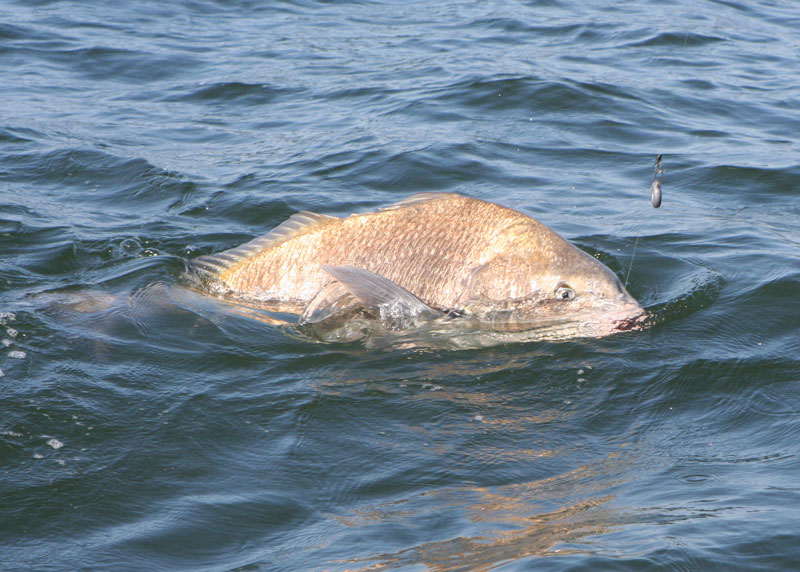
Black Drum in the Surf and on the Shoals
Anglers who brave chilly suds will be rewarded with the first big fish of the spring to swim within casting distance of the beach while surf fishing for black drum. The first fish generally show up just after that magic temperature mark has been hit, but expect their numbers to remain on the low side for most of the month unless we enjoy an early warmup. As March draws to a close it’s likely their numbers will begin ramping up significantly, with the peak coming in April. Until then a one- or two-fish day is considered successful, but after a long winter sitting indoors reeling in one black drum is more than enough to get many anglers excited.
While casting from Assateague is the best-known way to target these fish, if you can get to any of the southern inlets and beaches by boat and soak baits along the shoal edges you’ll have an excellent shot at hooking up. Some big black drum will show up at the mouth of the Bay and the surrounding shoals during this same timeframe.
Use top-and-bottom rigs with 6/0 to 8/0 hooks and sand flea or crab baits to get these fish on the line. A favorite of surf fishermen, who need a rugged bait to survive a roaring surf and long casts with heavy weights, is to slide a strip of Fishbites clam flavor onto the hook then add a jumbo flea or two. Boat anglers often reach for whole clams. Halved blue crabs, even hard ones, are another favorite of the black drum.
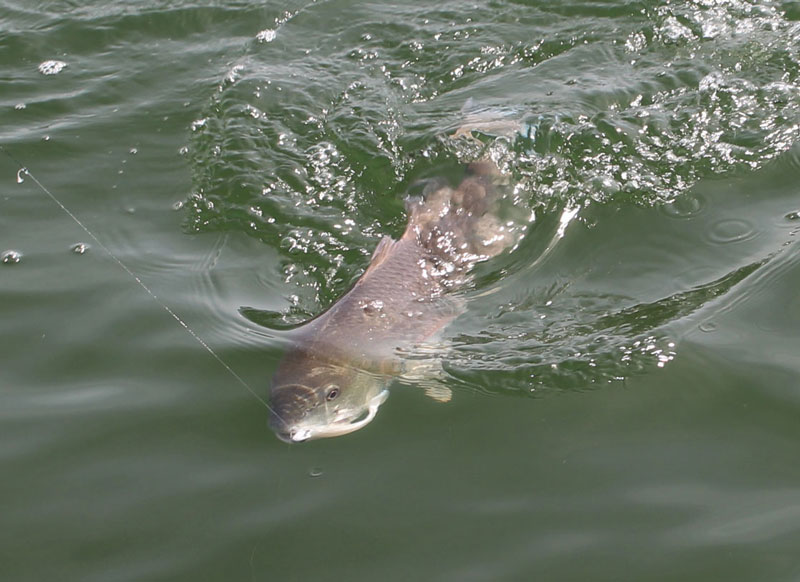
Slot Reds at the Inlets
Slot redfish can be found in the Lynnhaven, Rudee, and Little Creek well before the water warms up this much, but when it hits 50 degrees expect the action to pick up significantly. When the sun’s out and warming up the shallows, the reds will move up onto mud flats. And on chilly or cloudy days expect the fish to be along channel edges with eight to 10’ of water or more and near structure like piers. Remember that many piers will be blanks and a few lucky ones tend to hold the lion’s share of the fish, so stay on the move until you get bites. Then set up camp and go to work.
Small jigs and plastics on eighth- and quarter-ounce heads work well when the redfish are shallow and upsizing to a half-ounce or so will catch them in the deeper zones. Fresh shrimp is always a good offering, and live bull minnow can prove surprisingly effective, too. Both baits can be fished on a bare hook weighted down enough to sit on bottom. Fair warning: expect a crowd in these waters on weekends with nice spring weather.
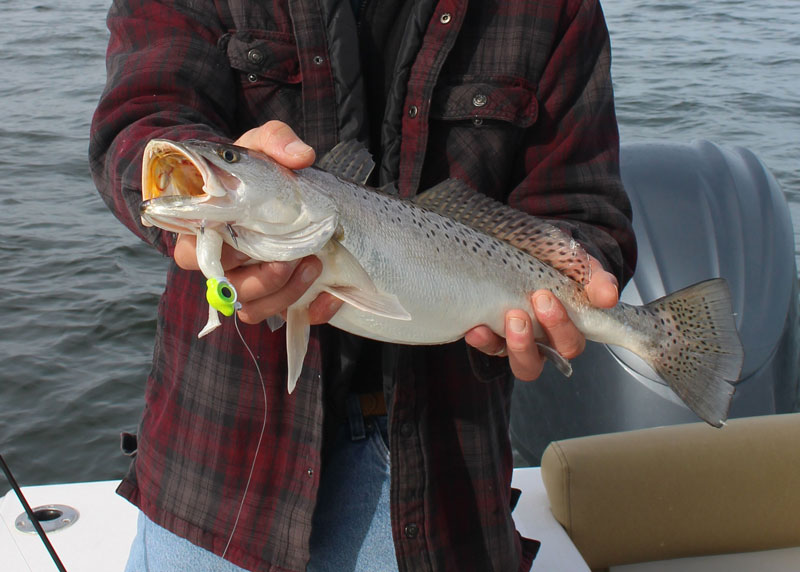
Elizabeth River Specks
This is another fishery that hearty anglers can tap into while the water is still in the 40s, but the bite gets juiced as the waters warm up. You’ll get some reds here too (as well as catching some specks in the inlets), but if you want to target those spring speckled trout in specific this is the place to be.
Expect the fish to be relatively deep—10’ to 15’ is a good bet. But tie on light jigheads, anyway, and be patient because the trout will usually still be on the lethargic side this month. A slow, enticing, bottom-bouncing presentation is often the ticket to success. Though it will take a while to sink to bottom with a quarter- or half-ounce head, and keeping your jig there will be difficult in some situations, their sluggish fall is often what it takes to trigger bites. Three- and four-inch paddletails are a good choice and flavored tails like Gulp!s can prove exceptionally enticing, too. Also remember that neutrally buoyant deep-diving jerkbaits can work wonders at this time of year, especially if you give them a slow crank-pause-twitch-crank.
Flounder on Edges and Inlets
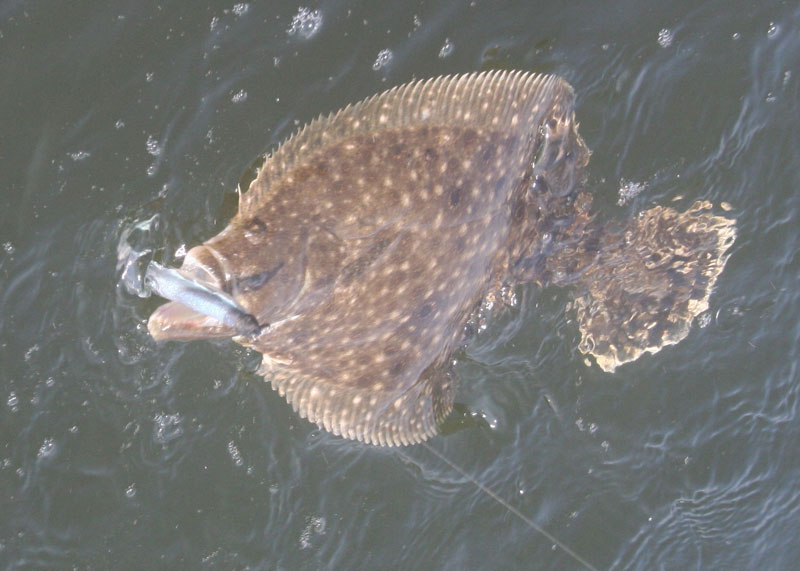
While many anglers think of April as the beginning of flounder season, most years the early-birds start catching a few fish in March as the temperature breaks our magic barrier. As with those early black drum you can’t expect fast and furious action, and catching two or three fish this early in the season makes for a great day. But the early fish are often big ones—and it’s definitely exciting to go home with fish in the cooler this early in the season.
Many people head for the inlets and coastal bays to take their first shot at these flatfish, but there’s also bound to be some caught in the deepwater structure surrounding the Cape Henry area. How to best target these fish differs radically depending on the area and the depths you’re fishing. In the inlets the flounder may move uber-shallow on a sun-warmed afternoon, sometimes up onto flats just a couple-few feet deep. When the falling tide is draining pockets of sun-warmed water marsh and creek mouths can be good. In either scenario casting light jigs in the shallows can be productive, as can fishing a small bucktail tipped with a twister-tail or a live minnow.
At low and incoming tide, however, the fish will likely be hugging channel edges. And when fishing at the mouth of the Bay you’ll also find the fish down deep. In both of these situations there will usually be plenty of current to contend with, so drifting or slow-trolling with bait on heavily weighted rigs like Fluke Killers is usually a better move. While Gulp! can work, too, and often out-performs the real thing during the summer, at this time of year it’s very difficult to beat a Fluke Killer rig tipped with the classic squid and minnow. Strip baits cut from the belly of bluefish, false albacore, or a flounder you caught last season works quite well, too.
On top of these five fisheries other opportunities are sure to pop up this month. The first bull redfish should arrive on the shoals of the ESVA at some point, we can expect some big striped bass to show up after they spawn and start heading north, and perch runs will be happening up in the tribs. Spring is here, people, and we’ll soon be hitting 50. Watch for that mark to arrive, because our first spring bites of 2026 are right around the corner.