Attention Maryland Anglers: It appears that we may once again legally catch and release rockfish during the month of April in Maryland waters. Chesapeake Bay anglers in the state of Maryland will remember that for years, going all the way back to the moratorium, we were able to enjoy catch and release fishing for stripers in areas of the Bay that were nowhere near the spawning grounds during the month of April. Then a few years back the state instituted a no-target rule, closing down every inch of the Bay’s waters to all of us. That had zero effect on the fish’s spawning success—it actually grew worse through that timeframe—but it did have the effect of shutting down recreational anglers, guides, and charters. Tackle shops and marina businesses took a beating, too. For 2026, however, April catch and release fishing is back. Added bonus: this month you’ll even have a chance of tying into the rockfish of a lifetime.
Spring Trophy Striped Bass Regulations
Of course, every responsible angler wants to make darn sure they play according to the rules, many of which are set up to ensure that we minimize harm to the fish and the fishery. We need to remember that the regulations are constantly subject to change, and there’s some possibility that there’s been a change between the time we published this article and the time you read it. So it’s always a smart move to give the regs a look and make sure everything is as expected before you go fishing. Visit the DNR fisheries regulations webpage for the latest updates.
That said, regulations are expected to mirror those for March, including:
- No stinger hooks allowed.
- Barbless hooks required for trolling.
- No more than six lines when trolling.
- The usual circle hook regulations apply when using bait.
- The use of eels for bait is not allowed.
Also, as in March, areas anywhere near the rockfish’s spawning grounds remain closed completely to any targeting of rockfish, including catch and release. The area open to catch and release fishing runs through the main-stem Bay from a line between Abby Point and Worton Point to the Virginia line including the Tangier and Pocomoke Sounds. Note that the Susquehanna Flats, which are open to catch and release during March, are closed during the month of April. The DNR Striped Bass Regulation maps clearly show the areas that are open versus closed. Again, remember that the details are subject to change so always double-check before fishing.
Catch and Release Responsibility
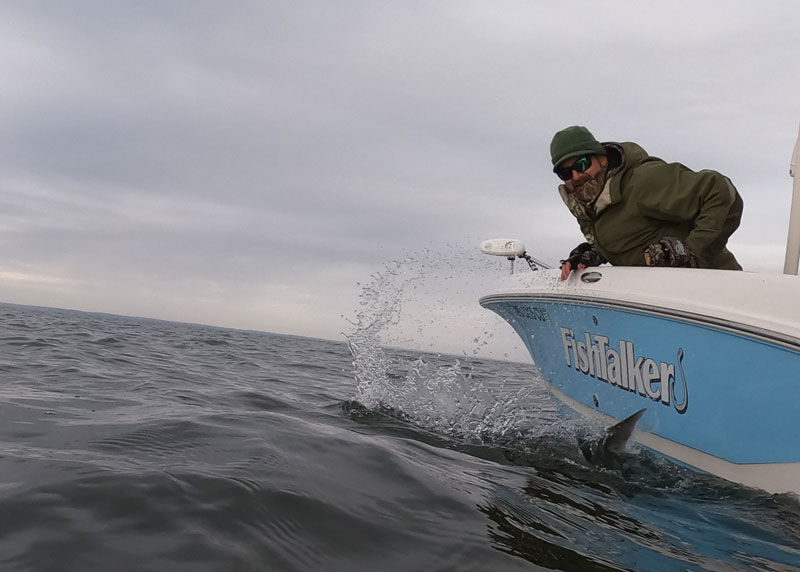
One of the reasons April is being reopened for catch and release fishing is that this month has ideal conditions for it, with studies showing a spectacularly low release mortality rate—1.6 percent in water under 59 degrees and below, while the average water temperature for April is 54.9 degrees. That means 98.4 percent of the fish should survive an encounter. But the word to use here is “should,” not “will,” because how you handle those fish will have an impact. We know we’ve harped on responsible catch and release best practices on these pages in the past and we hate to seem redundant, but each and every time one of us manages to catch one of these trophies we’re holding the future in our hands. It’s too important to gloss over. So:
- Go with heavier gear than you normally might to minimize fight-time and reduce the chances of a fish fighting to the point of exhaustion. Fishing 30-pound braid/40-pound leader or heavier on a 4500 or larger reel and a medium-heavy or heavy rod is the move—leave your summer gear at home. Be sure your drag is set appropriately, and make the battle short and sweet.
- Even if you’re not trolling, why not crimp down the barbs on your hooks? If you play it right you’ll still catch the fish, getting the hook out will be a piece of cake, and you’ll feel great when that fish swims off quickly and strongly.
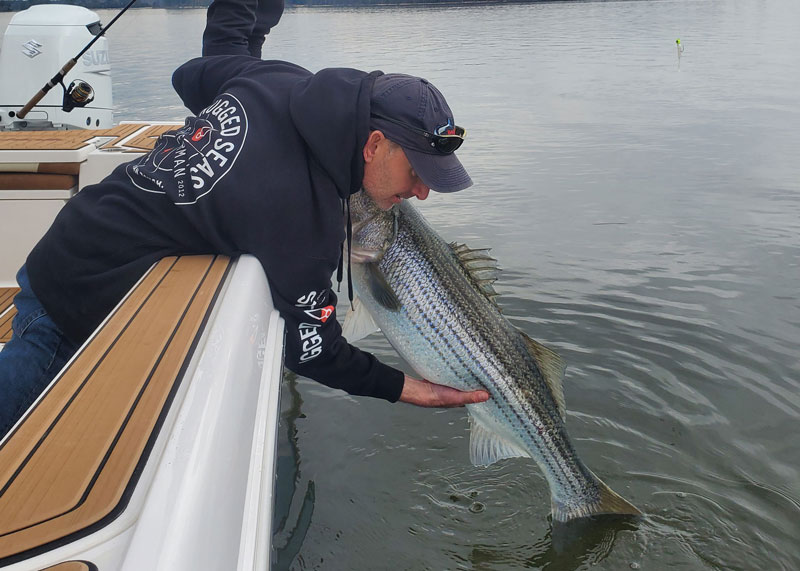
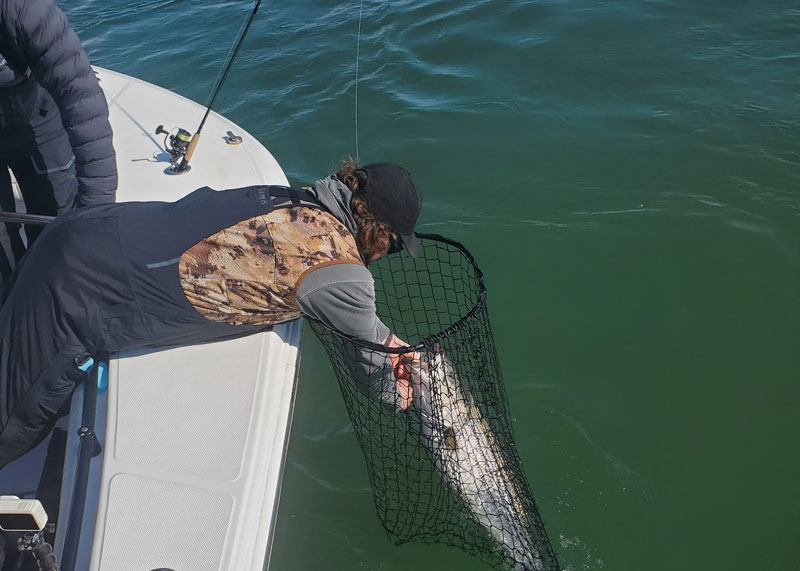
- Ideally, don’t “land” the fish but instead bring it up to the boat and to get a picture lift it out of the water for just a couple of seconds. Sure, we understand that an angler catching his or her PB will certainly want to bring the fish in and hold it up briefly for a good photograph. In that case, lip the fish with one hand while staying clear of the gills and gill plate, slide the other hand under the fish just aft of its belly as you lift its head, and hold it horizontally. As you begin the process take a gulp of air and hold your breath. When you run out of air remind yourself that the fish can’t breathe either, and get it back into the water asap. We can’t stress it enough: minimize time out of the water. If you’ve already caught a trophy and taken that on-the-boat picture, from that point forward consider getting in-water photos, only.
- We understand that in some scenarios (again thinking of those PBs) you’ll want to use a landing net. But never, ever, use a landing net with knotted nylon. (If you still have one please throw it away). Use a proper release net with the mesh covered in rubberized coating, to prevent removing slime and dislodging scales from the fish. And never dump a fish onto the deck where it can flop around on fiberglass and injure itself. Instead, the netter should maintain control while the angler removes the fish from the net using the same method as described for removing one from the water. Once the fish is secured by the angler the netter can drop the net, remove the hook, and do his or her best paparazzi impression.
- Remember, nets aren’t the only thing that can remove the fish’s protective coat of slime. Touching the fish with anything that’s dry, like your hands, a rag, or clothing, can also cause harm. Before handling a fish wet your gloves or hands, and only use a sitting position resting the fish on your legs if you’re wearing bibs you can wet. Plan ahead by bringing backup gloves and pack a towel so you can dry yourself off if necessary.
How to Catch a Trophy Spring Rockfish
So, how are you going to get one of those striped beasts on the line? Trolling and jigging are the two main tactics you’re likely to employ. Many light tackle enthusiasts will default to jigging, and I’ll be the first to agree that feeling the strike and reeling in a fish on a spinning rod is more fun than waiting for a rod to go down and cranking the fish in. However, I’ll also be the first to admit that at this time of year when fishing for trophy-class rockfish in specific, trollers do more of the catching. So, if you’re more focused on bending a rod than bagging a trophy and catching fish in the 20s and 30s with an outside shot at a trophy makes you happy, jigging will be the way to go. But if staring a big beast in the face is your number-one priority trolling is the move.
Trolling for Spring Trophies
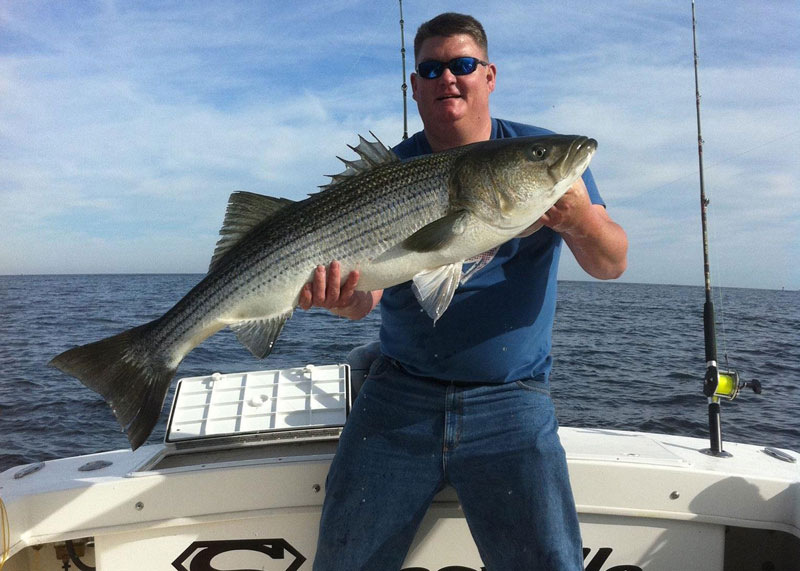
You say you want the best shot at catching a fish over 40”? The big fish are often scattered in April, so meandering through open water makes an encounter most likely.
- Still set out planer boards even though you’re limited to six rods, because the planer lines do catch the lion’s share of the fish on many days.
- Run tandem rigs with no additional weight off the planers. Some anglers like to put four lines on the boards then run a couple of umbrellas, weighted or unweighted, from the boat.
- Stick with nine-inch shad, in white and chartreuse. On rare occasions mix things up a bit by using chartreuse and white.
- Troll perpendicular to the current; this mitigates current/speed issues, and it also puts the lure in front of the fish’s face as it swims against or with the current.
- Try to troll at around 2.8 to 3.0 mph.
Kayak Trolling for Spring Trophy Rockfish
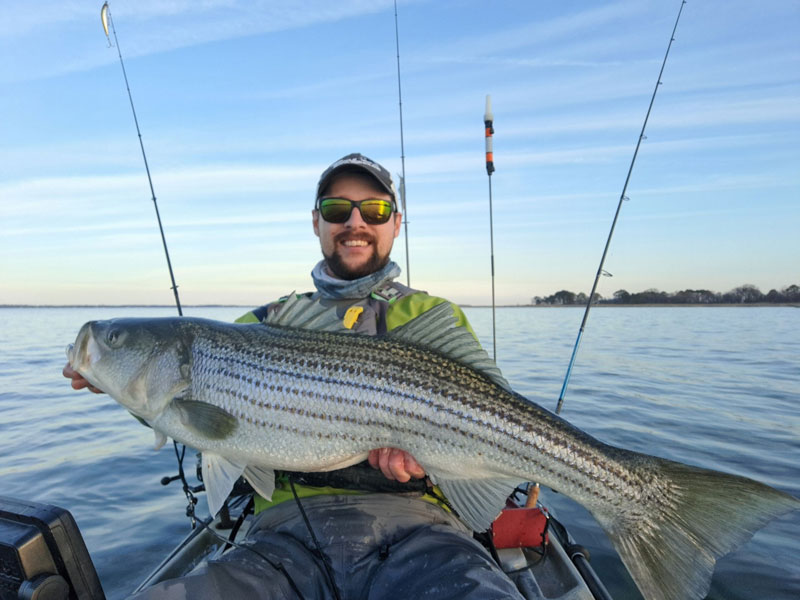
Kayak anglers can get in on this action too, though you’ll need to watch for an appropriate weather-window when the open waters are fishable. Note that water temps at this time of year are still downright dangerous, so it’s best to buddy-boat with a friend and wear a dry suit just as you would in the middle of winter.
- Stick with relatively shallow (four to 10’ deep) water along points and contours where shallow flats transition to greater depths.
- Mornings and evenings will be your best bet.
- Relatively large swimming plugs like X-Raps and Crystal Minnow of six or more inches that run from two to six feet deep are good offerings. You’ll need to swap the store-bought treble hooks for singles.
Jigging for Trophy Spring Stripers
You say catching smaller fish is just fine, especially since there’s always a shot of hooking up with a cow? Then April jigging is the move.
- The usual soft plastics work great, but larger baits generally get more attention than smaller ones. Tossing seven- to nine-inchers often works noticeably better than fishing with four- to six-inch baits. In shallower areas big jerkbaits can be highly effective, too.
- If you spot active fish on bait, great—but don’t plan on it. The big fish are often on the move at this time of year, the smaller fish have rarely schooled up beyond forming small wolfpacks, and finding a feeding frenzy is very rare. Instead, focus on structure.
- Remember that you can find fish surprisingly shallow once water temps rise above the 50-degree mark. Casting to shorelines is not out of line, especially those with good structure and nice drop-offs to four or more feet of water.
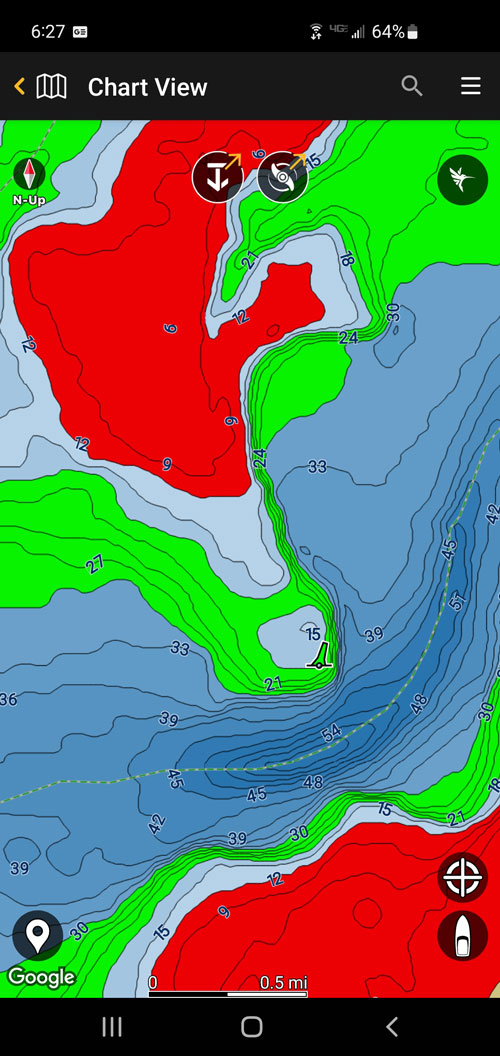
- Underwater humps and points that get hit by current can be big producers this early in the spring, especially if they’re surrounded by relatively deep water. Also look along ledges and channel edges that get smacked by moving water.
People, it’s April. And for 2026 that means we’re back in business. Replace those leaders, dust off that tacklebox, and inspect those hooks, because catch and release for preseason rockfish is open once again.
Editor's note: You want to hook up with a trophy but you don’t have a boat, or yours is still under shrink-wrap? Consider hiring a guide—many of those featured in our Charter guide will be booking catch and release trips this month!