Presented by Sirius XM Marine

If you missed it, be sure to check out The Thunnus Among Us: Catching Yellowfin, Tuna Part I.
Rigging ballyhoo used to be considered an art, but with rigger swivels, rubber bands, and ballyhoo springs it’s become as simple as one, two, three… right? Nope! These tools certainly do aid in rigging, but if you want those yellowfin tuna to pounce there are some fine details you’ll want to pay attention to.
It’s All in the Eyeballs
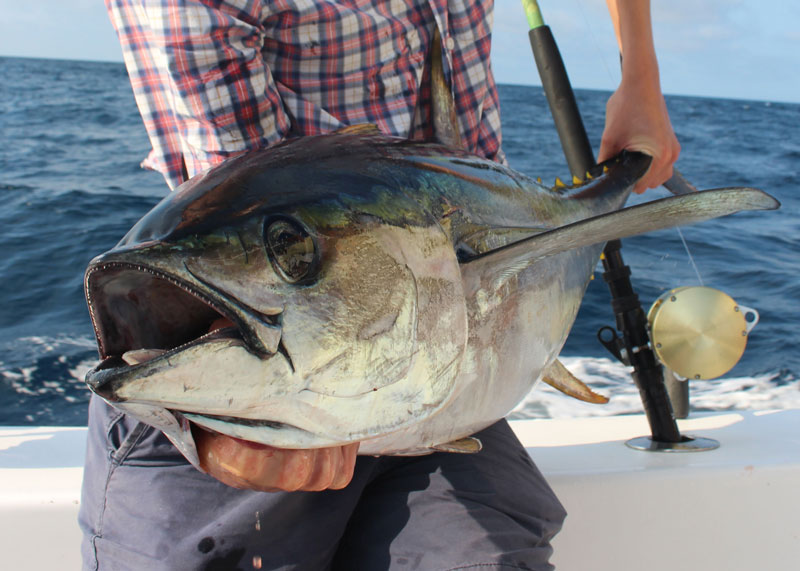
Not the ballyhoo eyeballs—the yellowfin’s. Tunas have incredible eyesight, and they aren’t easily fooled. If you send a ballyhoo back in the spread and it drags like a stick, the chances of a tuna striking at it go down the tubes. And different rigged baits will swim more or less depending on how they’re prepped and how they’re rigged. In fact, the number one mistake most offshore anglers make, be they beginners or pros, is failing to observe each and every bait to be sure it’s swimming like the live thing. When you drop one over the side if it drags, spins, turns on its side, or looks unlifelike, pull it in and try a repair job. Make sure that every bait you leave out there is slithering and kicking vigorously, and you absolutely will get more hits.
Tip: In rough seas upsize the chin weights a bit. This will help keep the ballyhoo on an even keel as the boat surfs waves and speeds up, or beats into them and slows down. We’ll talk more about wind, waves, and weather in a bit, but suffice it to say that planning around it can have a dramatic impact on your day offshore. Running to an area that allows you to set the lines while trolling down-sea, for example, will be a big help as the day gets started. And trolling in a direction that allows you to run home with the seas on your transom will make life a lot more pleasant. Of course, the weather is constantly changing out there. You’ll want to keep constant tabs on it even as the forecasts change, which is best done via SiriusXM Marine weather since it constantly brings in the latest updates to your MFD.
So, about the ballyhoo’s eyeballs: there are two schools of thought. Traditionally some very good anglers (especially down south) believed a ballyhoo would never swim its best with the eyes intact, and they punched them out. Some other very good anglers (especially up north) believed that predators target the eyes of a fish they’re trying to eat, and that if you punch the ballyhoo’s out you’re diminishing the bait.
Like many aspects of fishing we could all argue about this all day long, but the advent of some newer rigging techniques have made the argument moot to some degree. In the past the ballyhoo’s eyes often bugged out when you wrapped copper wire through the sockets, and the fish started swimming funny. But this is less of a worry these days because fewer people wrap with copper anymore, and when you’re using a pin rig with a spring or rubber band, it’s rare for the eyes to bug out. Plus, most modern anglers troll most baits in tandem with skirts or lures, which negates much of the problem as well.
Whichever side of the argument you fall on, in this case the important thing to remember is that yes, buggy eyes can mess up the swimming action and you should be watching for them. But no, if you’re not rigging with copper you shouldn’t have to worry about it too much.
Prepping the Ballyhoo
Most people are familiar with the basics of the rigging process. First, de-poop the ballyhoo:
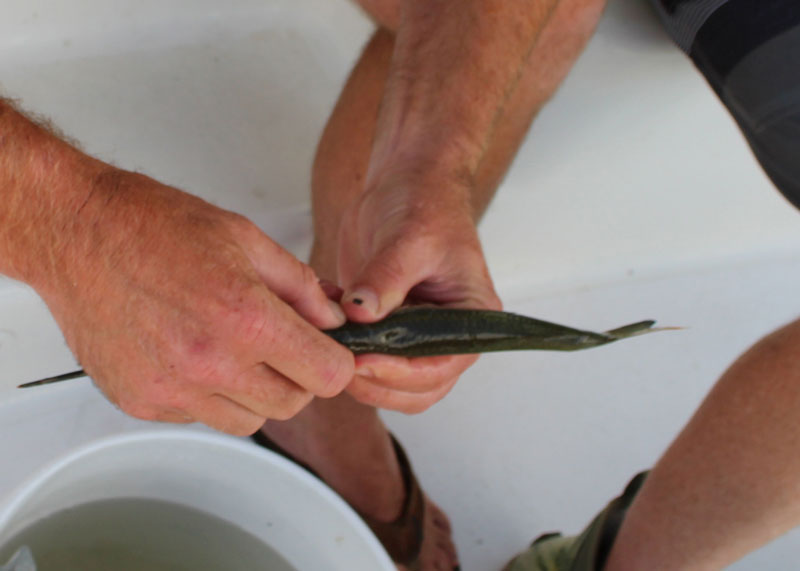
Then hold the hook up against it to see where the shank will come through, use the hook point to open up a hole, then slide the hook in under the gill plate and thread it through to the hole. Do it properly, and the ballyhoo will sit on the hook shank without bending, with the pin positioned to push up through the lower and upper jaws.
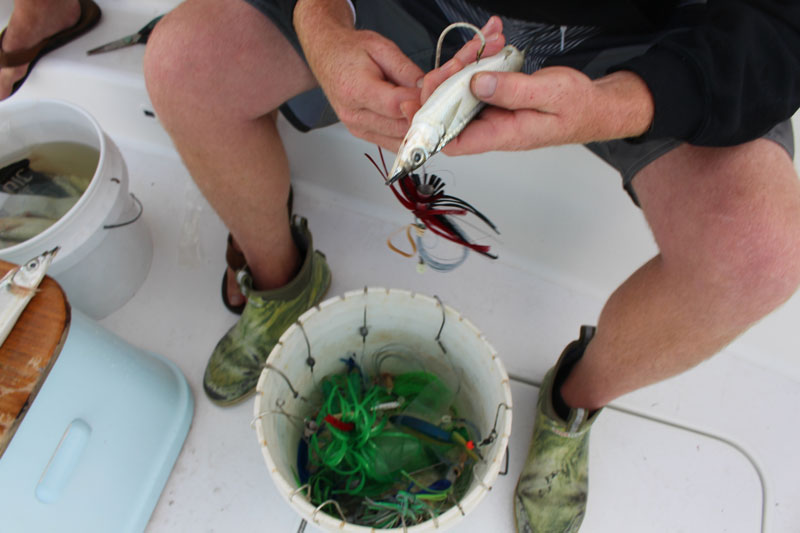
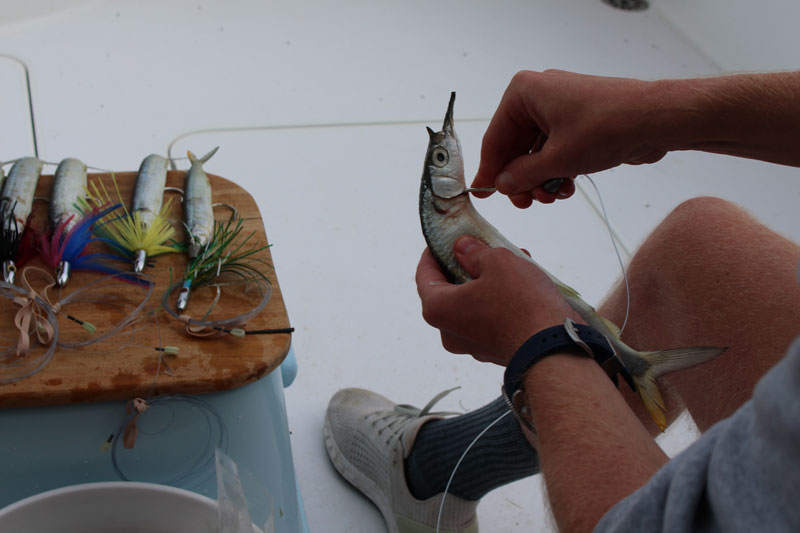
Then you can spin on the spring, bend on the rubber band, or if you’re a dedicated old-timer, wrap on the copper. The key here is to make sure the fish sits on the hook without bending and/or pulling against the skin where the hook comes through. Either will prevent the bait from swimming properly.
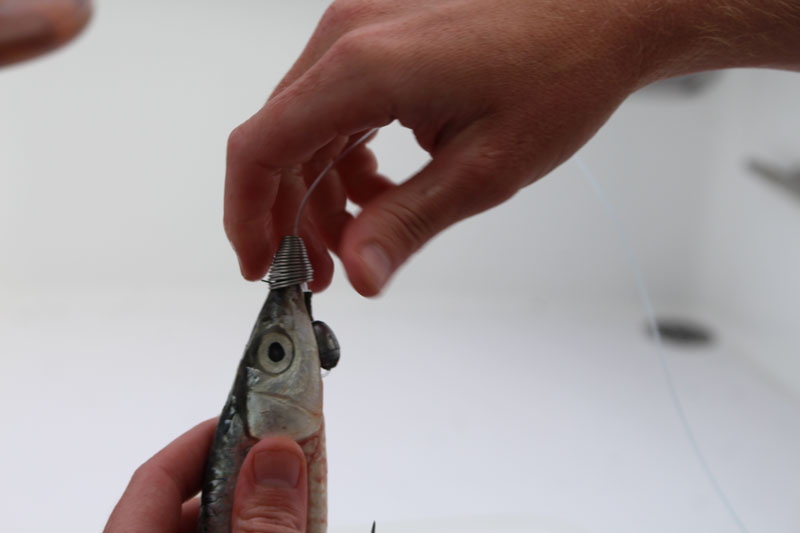
Okay: let’s say you’ve got it on perfectly and you're ready to start trolling for yellowfin. Don’t be so fast about tossing that bait over the side. First you need to limber it up (which many people prefer to do prior to inserting the hook). Taking your forefinger and thumb, start at the back of the ballyhoo’s head and pinch hard enough to pop up the ridge of scales where they meet along the fish’s back. Work your way all the way aft to the fish’s tail, loosening up those scales. Then grab the fish’s tail in one hand and the head in the other, and manually make it “swim” to loosen up the backbone.
Now that bait has a lot more flex, and you’re ready to try tempting a tuna with it. But instead of sending the ballyhoo directly into the spread, hold the rod tip low and keep it close to the boat for a few moments to observe that fish. Is it swimming like a champ? Excellent. Is its aquatic agility sub-par? In that case yank it up and re-limber. You may also be able to salvage un-swimming baits by adjusting the pin, spring, rubber band, or copper. And if you can’t get that little fish to start paddling furiously, the smart move is to toss it back into the cooler and grab a different rig.
Tip: When you first arrive at the offshore grounds, you may want to set out the complete spread post-haste just to get the ball rolling. As we mentioned, doing so while trolling down-sea is advantageous when it’s sporty out. Start by just getting the lines out and after the initial spread is set you can turn your attention to each individual bait, one at a time, to make sure they’re swimming properly. Then through the course of the day you can take your time with each bait as you change or replace them.
So, can we still call ballyhoo rigging a form of fine art today? That certainly isn’t as true as it once was. But if you pay attention to the details and make sure each and every ballyhoo in the spread is kicking and swimming like an Olympian, that fishbox will soon be painted in red. And that, for many of us, looks better than the finest masterpiece in the world.
Tip: What about brining ballyhoo? Some anglers brine their baits to toughen them up and it does indeed help them last far longer, but it can also reduce their swimming aptitude, especially if you brine them too long. And most store-bought ballyhoo were pre-brined before they were frozen, so repeating the process upon thawing them has the potential to do more harm than good. That said, if you get a batch of soft or weak baits most pros recommend letting them thaw, lining them belly-up, sprinkling on a dusting of dry brine, and giving them a few hours to sit before use.
Where to Try Tuna Trolling
Before you deploy a single one of those lovely baits you’ll want to figure out just where those yellowfin tuna are swimming. SiriusXM Marine is bringing us this three-part series focused on fishing for yellowfin because finding these fish is one of the features their service can help with. But choosing a destination then setting out a spread of tempting baits is all rather moot if you can’t get off the dock in the first place. Offshore anglers are at the mercy of nature, and gusty winds or raging thunderstorms can shut us down in the blink of an eye. With SiriusXM Marine satellite weather data being beamed into the MFD, however, we’ve had experiences where it was possible to leave the dock before the rest of the pack because we knew the storms were heading elsewhere or had cleared out. We’ve been able to stay out longer, knowing that the wind was going to drop out rather than pick up. And we’ve changed course—more than a few times—to avoid running through storms. Having the latest weather intel available at a glance makes heading offshore safer each and every time you toss the lines and pull off the dock, period.
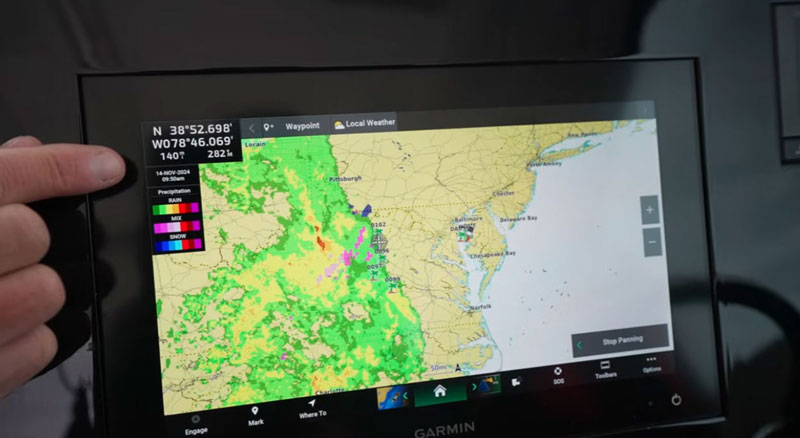
Get Fish Mapping, and on top of the safety boost you’ll get the ability to tap into sea surface temperatures (SST) right on your chartplotter even when you’re far offshore. You can also see subsurface sea temperature 30 meters down, look at plankton charts, and when you plan your trip on the Fish Mapping app you can check out ocean currents and create and store routes. Still, marine weather is the number one reason to sign up for SiriusXM. Because when you’re working with an old weather “prediction” instead of considering the very latest data, you’re simply not as safe as you could be.
See The Thunnus Among Us: Catching Yellowfin Tuna Part III, Artificial Sizzle.