Which fishing rod you choose will affect everything from casting distance to how comfortable that rod feels in your hands. It’ll have an effect on what you feel—and what you don’t—when a fish sniffs at the bait, how fast you can set the hook, and ultimately how many fish you catch. We’ve talked about factors like the speed of the rod’s action and which sizes are best for what fish in the past, but if you want to see the complete picture you’ve got to dig down deep into the details and gain a full understanding of a fishing rod’s different pieces-parts.
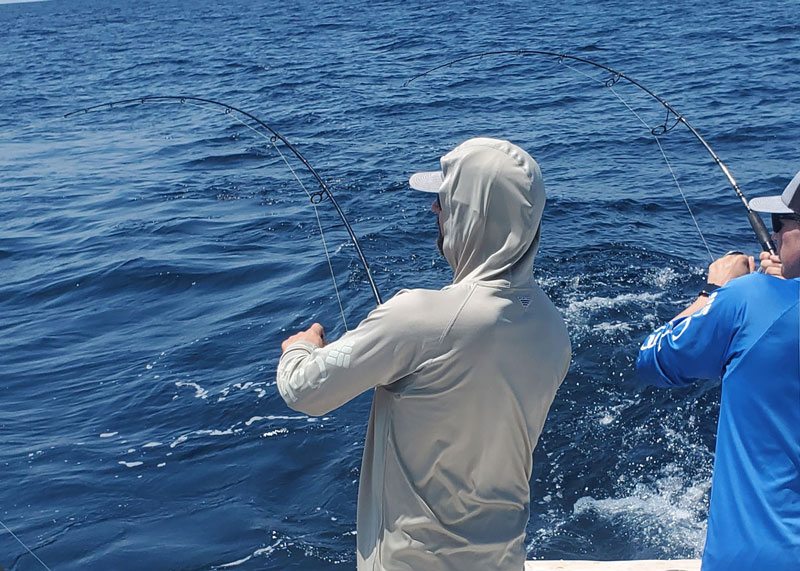
THE BLANK – That long, skinny shaft that makes up the backbone is the base of any fishing rod, and characteristics like its length, speed, power, and weight will play a huge role in determining how happy you are or are not with any specific rod.
When it comes to choosing the ideal length it depends entirely upon how you fish and what your personal preference is, but there’s one rule of thumb that (all other factors being equal) applies to just about any rod: the longer it is the farther you can cast. On the flip side of the coin, the longer it is the more unwieldy it can become and many anglers can cast more accurately with a shorter rod. Also remember that when casting in tight surroundings, such as shorelines with overhanging trees or boats with T-tops, shorter rods have the advantage of smacking into stuff less often. Generally speaking most anglers prefer either a 6’6” or 7’0” rod for general purposes, but anglers plinking lures into tight pockets will likely want a shorter rod, while those attempting to heave baits a mile will want a longer one.
Speed is an oft-misunderstood term which relates to where and how the rod bends:
- Fast action rods bend mostly at the tip and return to form very quickly.
- Medium action rods bend from the tip down to about the middle and are slower to straighten back up.
- Slow action rods flex from tip to butt all along the length and are the slowest to go from bent to straight.
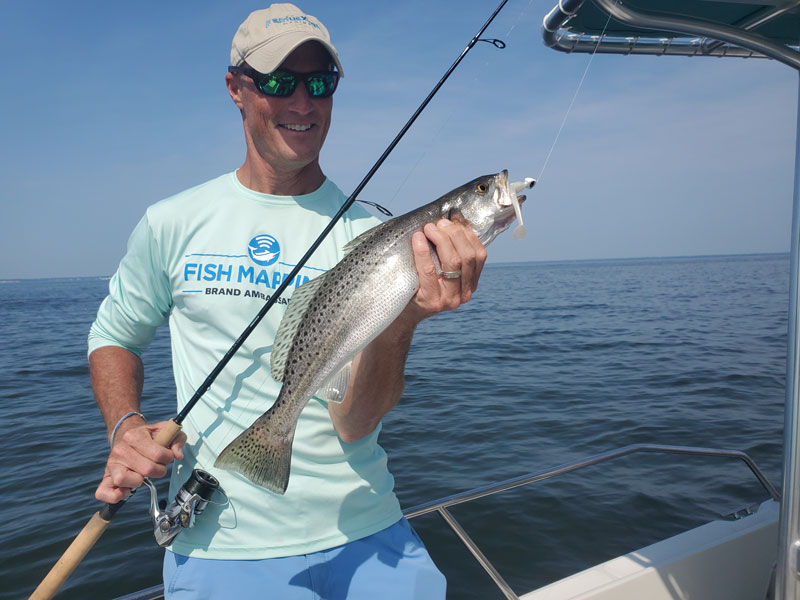
Which will be the best choice depends on the type of fishing you’re doing. When casting lures like soft plastics or swimbaits which require you to feel the bite and set the hook, a fast-action tip is usually best since sensitivity is topnotch and you can apply maximum pressure in the blink of an eye. But when you’re fishing with bait sensitivity can work against you if the fish feel something amiss, and the increased give of a slower action may make for the best choice. The added flex can also benefit beginner anglers because all that bend in the rod makes it easier to maintain some tension while fighting a fish, even if you pump a bit too fast or crank the reel a bit too slow. Trollers often like slower actions, too, since their rods will be loaded up under tension most of the time and it helps to have some additional flex when the fish strikes.
Power is the manufacturer’s rating for how much force is required to make the rod bend and it will generally match up with the line and lure ratings. Bear in mind, however, that it’s relative to the class of rod. There are rods for bass fishing that are rated “heavy” and tuna rods rated “light,” but the tuna rod will still be one heck of a lot heftier than the bass rod.
Weight is, well, the rod’s actual weight. As a rule of thumb lighter is considered better since it takes less physical effort to handle during long days on the water. But for some forms of fishing (such as trolling, where the rods sit in holders all day long) weight is more or less a non-issue.
To boost your knowledge of rod blanks check out Fishing Rod Blanks, What Custom Builders and Store Buyers Should Compare First.
HANDLES include the grip, butt, and reel seat. There’s a huge variety on the market and which you choose is as much a matter of personal preference as anything else. That said, most rods have “split” handles with fore and aft grip sections, and a solid reel seat section in-between. Rods with split aft grips and a small fighting butt on the end have become popular in recent years and some others leave portions of the blank exposed with the idea that vibrations will travel to the angler’s hands better for increased sensitivity.
Cork is the old standby grip material, and it’s tough to beat. It’s light, comfortable, grippy when wet, and sensitive. The only real downside is that over time chips and divots are bound to appear. EVA foam handles are more rugged, but that comes at the cost of some sensitivity. Recently, rigid carbon fiber grips have begun appearing on the market. These deliver a sensitivity boost, are very lightweight, and many anglers find them surprisingly comfortable.
To gather more intel on specific types of handles and grips see Fishing Rod Grips and Handles: The Complete Guide.
GUIDES come in a million and one varieties but they can be broken down into single-foot guides and double-foot guides. Double-foot guides are more rugged and are less likely to get bent or break off, however, they can also cut down on the rod’s flexibility.
Most guides are lined by a ceramic insert of sorts. These reduce friction as compared to bare metal guides and thus reduce line wear while boosting casting distance. However, if a rod takes a fair amount of abuse the inserts can crack, chip, or pop out, leaving sharp edges that eat through your line in no time.
For a deep dive into guides see How to Choose the Right Fishing Rod Guides.
Whew - it turns out there’s a lot more to a rod than meets the eye. But armed with a better understanding of all the pieces and parts, now you should be able to find or build the perfect poles for all of your piscatorial pursuits.
Choosing the Best...
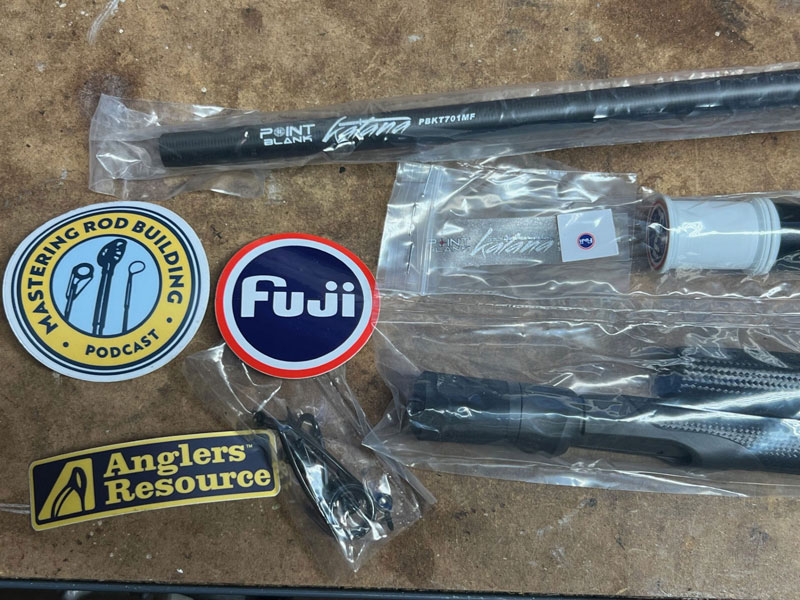
It’s not uncommon to find a blank you love, but with grips you can’t stand. Or grips that are great, but guides that don’t meet your needs. Truth be told the only way to ensure that every aspect of a fishing rod’s pieces and parts are exactly what you want is to have one custom-built or to build one for yourself. Check out our Custom Rod Building series The Artful Angler, parts I, II, and III, to get the skinny on planning out and building the perfect fishing rod for yourself. It’s an awesome winter project which just about any angler can tackle and you might just discover that it’s a lot easier—and a lot more fun—than you’d think.