Winter fishing will soon be upon us. And despite the chill, icy-slick docks and decks, and short days, many Chesapeake anglers are looking forward to it in anticipation. If you want to hook up with the rockfish of a lifetime, this season can present opportunities that are second to none along the entire Atlantic seaboard—indeed, second to none in the entire world.
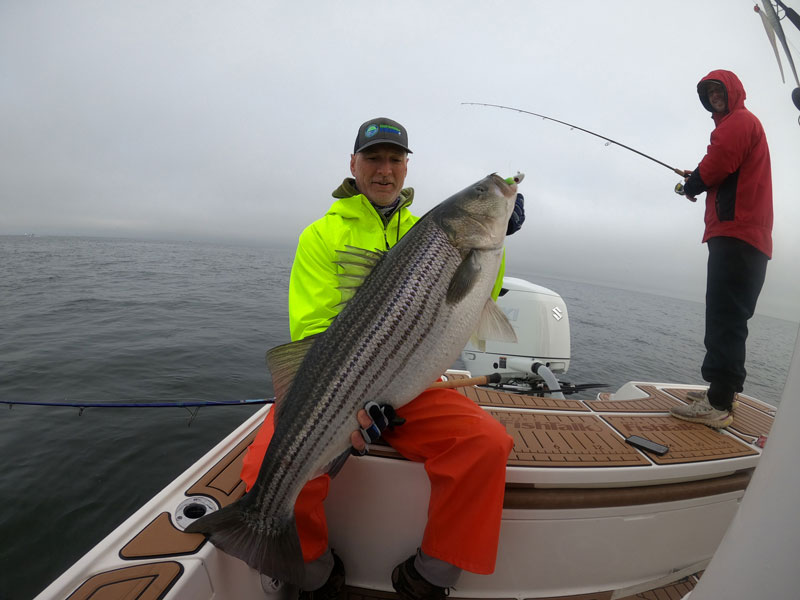
But we do have to remember, people, these are wild animals we’re talking about. While the fish have decided to hang a righthand turn and enter the Chesapeake in December every year for the better part of a decade, it hasn’t always been this way. In the 90s many of us would travel to North Carolina to find the winter mega-rock. In the early 2000s they began entering the Bay as early as mid-November, until they decided not to again. Then the oceanic water of Virginia held the best bite for a while, before the big fish once again started making a button-hook into the Bay.
Will we enjoy a radical December bite in the 2026 season? The chances are good that the fish will repeat recent patterns, but there’s no guarantee and we may have to wait a little longer. Or, they may come into the Bay and a sudden cold snap could send them into hunker-down mode, when they sit deep and refuse to eat. There’s just no telling. Follow the reports, people, follow the reports closely—and keep your fingers crossed.
Where to Find Winter Rockfish
Again, there’s a big question mark here. At some point the Way South is likely to see a nice run at the CBBT and around the mouth of the Bay. Point Lookout has a great historical track record, though last year the lower Patuxent turned out to be a hotter area. The mouth of the Choptank to Poplar to Chesapeake Beach has been a zone of solid action in some recent years. And digging back a few decadal cycles old-timers will remember that once upon a time the Bay Bridge was a hotspot.
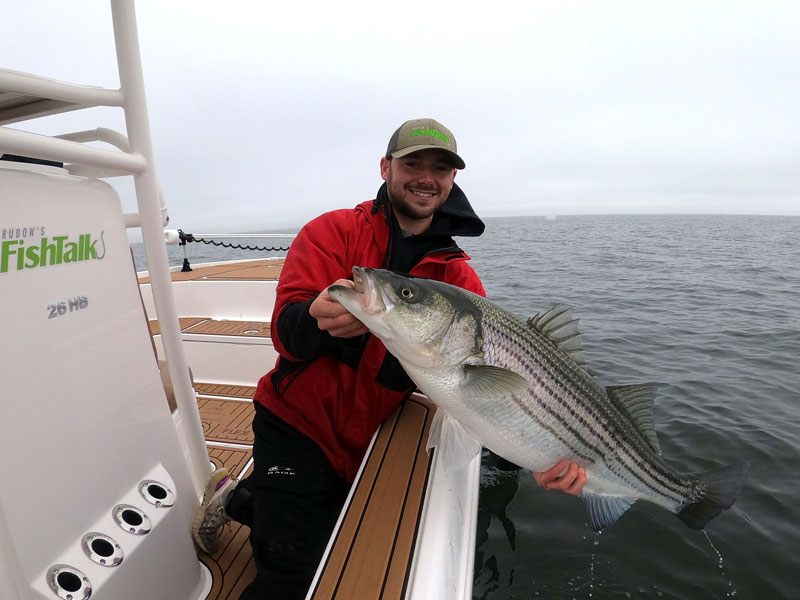
Bottom line, all bets are off as to the specifics. That said, there’s one way to predict the fish are likely to show up here, there, or somewhere: the presence of bait. In this case we’re talking menhaden, period. Those cow stripers really aren’t interested in smaller game like bay anchovies, and while they’ll certainly munch on eels or perch those species don’t provide the big blast of omega 3 they’re after. When you find hordes of bunker in late November and early December take note of the area and pray that the prey more or less stays put.
Bigger bunker get extra credit, too. We’ve seen the mega-rock focus in on smallish four- and five-inch menhaden before (in the Chesapeake Beach area during 2023, for example), but this is out of need, not desire. Those big fish would much rather expend their energy chasing down eight-plus-inch menhaden and the bigger nutritional bang they provide. So when you spot big schools of big bunker make that area among the first you check out for the big rockfish.
How to Catch Winter Rockfish
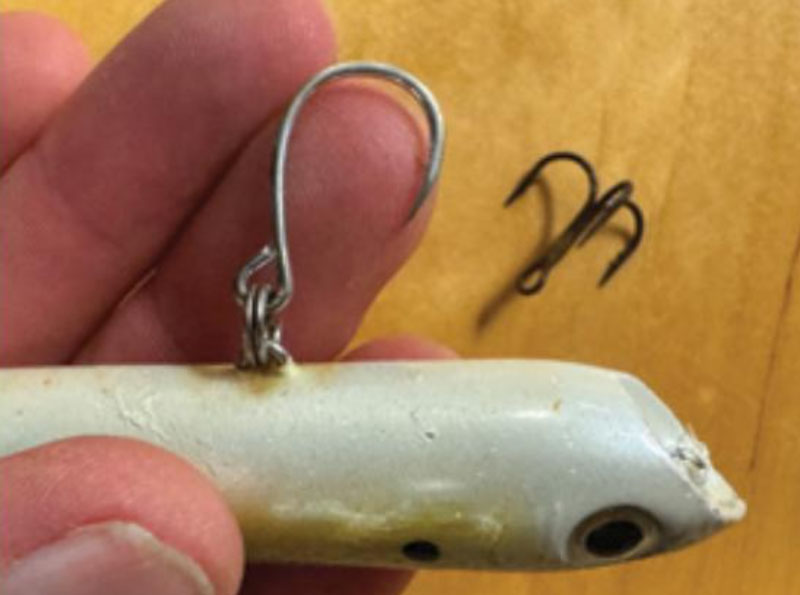
You have lots of options, here. Many anglers and guides who are hip to current popular trends will throw jigs with light tackle, usually one- to two-ounce leadheads with seven-inch or bigger paddle or eel tails. White, natural bunker, and chartreuse are the usual color picks and many savvy anglers add a skirt of contrasting color. If the fish go super-deep switching out to fast-sinking jigging spoons and bouncing them just above bottom often is the move. And if the fish go super-shallow, big jerk and glide baits come into their own. Note that last season in particular, very large glide baits accounted for a lot of impressive catches. But also note that most are sold with treble hooks, and many people would consider it downright unethical to participate in an all catch-and-release fishery like this with those barbed grappling hooks on the end of your line—be sure to swap ‘em out.
While casting for these fish with light tackle is all the rage these days, truth be told trolling with large plastic shad on umbrellas and tandem rigs is a very effective way to get monster rockfish on the line (except when they go super-shallow). Remember to ditch the stinger hooks and crimp the barbs. White and chartreuse will catch the lion’s share of the fish, but on cloudy days or in low light purples and black can do the trick. Keep your speed super-slow, and if the fish go deep be prepared to add gobs of lead to the lines.
In Virginia waters eeling is another tactic that’s proven hot more seasons than not. (Using eels is illegal in Maryland waters from December 5 through the spring.) Traditionally this meant anchoring up and fishing the eels under floats, often at the CBBT and often at night. Brrr… In recent years, however, slow-trolling eels has taken off. This means rigging up with a 10/0 circle hook on 40- or 50-pound leader and adding enough weight (usually anywhere from two to 10 ounces; many anglers mix it up day to day until figuring out how deep the fish are) to match the fish’s depth, then trolling along at a mere one to 1.5 mph or less; generally speaking, slower is better.
How to Handle Trophy Stripers
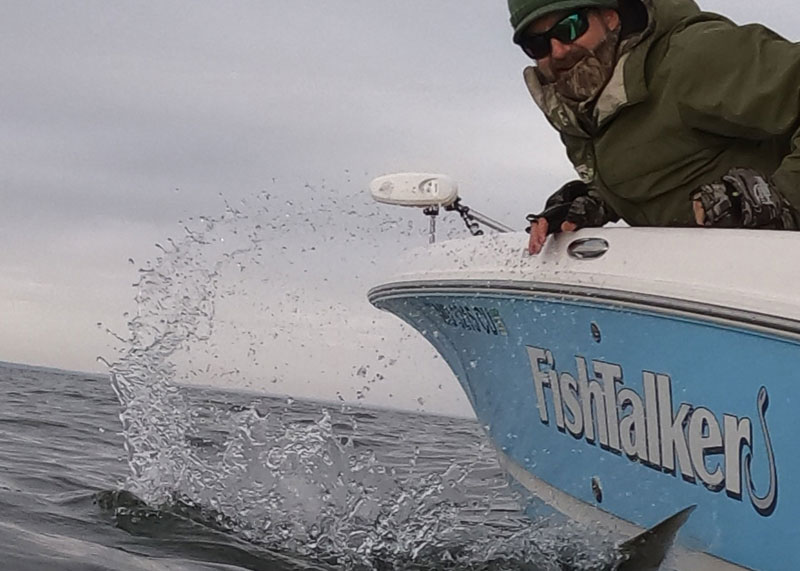
The spawning stock of large rockfish remains relatively strong, but the stock of small fish growing up behind them is weak at best. We need plenty of those big beasts out there so that when environmental conditions finally cooperate, we get a nice, big crop of baby rockfish. To that end it’s absolutely critical that as we catch and release these fish we do them as little harm as possible. We’ve covered catch-and-release best practices many times in the past, so please forgive us, dear reader, if this seems redundant.
If you want to get a quick pic of a trophy rockfish
- Scoop the fish in a net with a rubberized or silicon bag—never use a net with knotted nylon.
- Remove the hook with the fish in the net while it’s still in the water.
- Have the cameraman get prepped and ready while you clear your gear.
- Lean over the side of the boat, grab the lower jaw with one hand, and support the fish’s aft end near the anal fin.
- Lift the fish out of the net and water. Turn towards the camera, smile, and get the fish right back into the water—you should be able to accomplish this in just 15 or 20 seconds.
- Don’t let the fish come into contact with dry clothes/jackets/towels during the process, as this can remove its slime.
- When you get it back into the water, keep holding the fish’s jaw and either swim it in figure-eights or put the boat into gear at minimum idle speed to force water across the fish’s gills and help revive it.
- When the fish tries to chomp down on your finger, let go and watch it swim away.
- Dry off your icy-cold fingers and revel in the rockfish rash on the back of your thumb.
When you don’t need a pic or have already done a photo shoot
- Lip the fish rather than netting it, and don’t remove it from the water as you remove the hook.
- Swim it in figure-eights or put the boat into gear at minimum idle speed to force water across the fish’s gills and help revive it.
And when fishing for winter trophy rockfish always remember
- Don’t use gear that will extend the battle. This issue is biggest for light-tackle aficionados, who should choose a rod on the heavier side with a minimum 4500-size reel spooled with 30-pound test or heavier line. Using 40-pound leader is in order.
- Swap out ALL treble hooks for singles.
- Consider crimping your barbs. If you’ve already landed a 50” or larger rockfish in your lifetime, consider it again. If you’ve already landed a 40” fish that day consider it a third time. Reach for those pliers.
Winter is indeed coming, and in Chesapeake Country that means we can plan on plummeting comfort levels, shorter days, and fewer angling options than we’ve been enjoying up until now. But it also means there’s a chance of hooking up with the rockfish of a lifetime, right here at home. Bring. It. On!