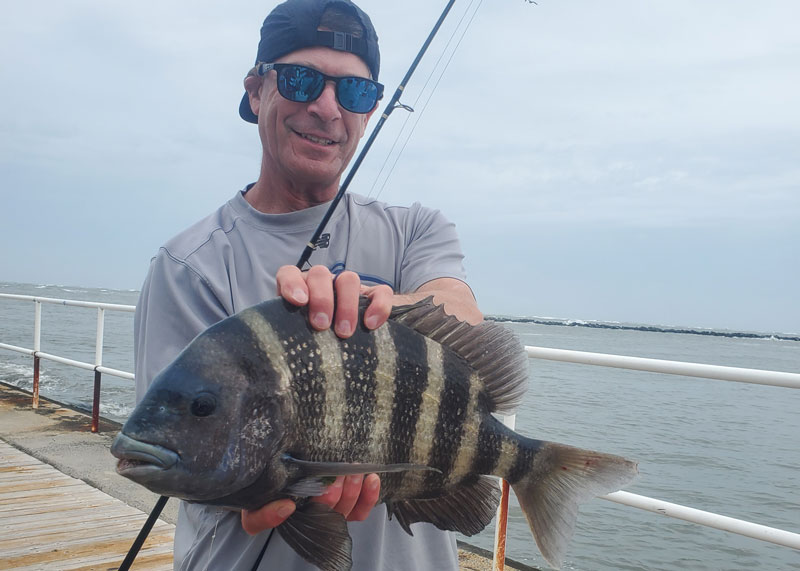
Whether you’re trying to tempt tautog, hoping to snare a sheepshead, or in search of a striper, rock jetties are potential hotspots. They’re also easily accessible in many areas, open to the public, and usually located near easy parking. If you’ll be casting at the coast and you won’t be going out on a boat, jetties provide one of your very best opportunities to bend that rod.
Reading the Inlet Rocks
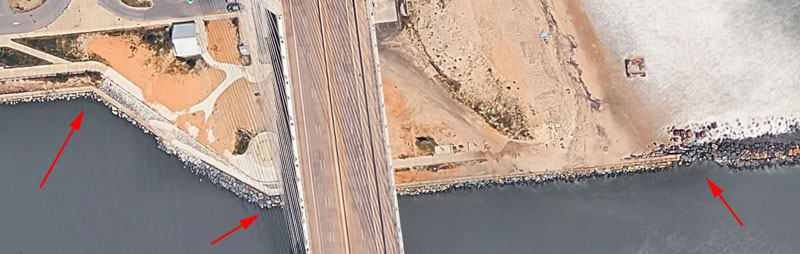
Anywhere you find a jetty, be it at the Indian River Inlet along the coast or on the Bay at Sandy Point, you’ll want to read those rocks just as you would read a river or a beach for hot zones. Standout features, like dog-legs, piles of unusual or extra rocks, or undercuts are all likely to attract more fish than the surrounding areas. TIP: Anytime you see a spot where it looks like rocks are missing, consider casting there. Over time rocks can fall loose and tumble into the water, where they then provide an extra measure of standout structure.
Another thing to consider is the surface area you have to work with. Caution: In many places at many times rock jetties can be extremely slippery and downright dangerous to fish from. Particularly when the wind is strong and the spray is flying, it might be wisest to fish from land along the rocks rather than walking out onto the jetty itself. Naturally this is a matter of safety, but there’s an angling element to consider, too: casting may be difficult, baiting a hook can become nearly impossible, and your reel is likely to take a dousing. In the long run, your cooler might be a bit heavier at the end of the day if you opt not to try doing a balancing act on the boulders. TIP: When walking on slippery rocks that get covered in slime and algae a pair of golf shoes or hiking crampons will help.
Job Number TWO
Naturally catching a fish is job number one, which leads us to job number two: not getting snagged. Along virtually all jetties there are snags galore, and the rocky crevasses and cracks can eat one rig after the next. When casting and retrieving lures you can mitigate the issue by keeping your offering higher in the water column. But when tossing bait, not so much. As in, not at all. But there are two basic tactics you can use to try to minimize snagging.
The first is to make an epic cast waaaaay out there beyond the rocks. At most inlet jetties what will happen next is that the strong current will push your line and drag your rig until the weight hits something firm, like a rock. And you’re snagged. Well, hopefully maybe not. The likelihood is impossible to say because it all depends on the strength and direction of the current and just how snaggy the bottom is.
The best thing you can do at this point is sit tight and resist the temptation to move that rig a single inch, because if you do move it the chance of lodging into a crevasse go through the roof. If bites don’t materialize or you get a solid miss and need to rebait, raise your rod tip as high as possible and reel as fast as possible to get that rig up off the bottom and keep it well above the snags on its way in.
The second tactic is to perch your rig atop the rocks that are close in. It’s a bold move that can be close to impossible when the current is running strong over jagged rocks, or it may be a piece of cake when the current is weak and the rocks are flat. Every jetty is different and all of them experience different conditions depending on the tides and currents. You’ll want to use a weight (and plenty of it) with a flat surface to minimize rolling, and it can also help to cast down-current to minimize drag on the line.
Which way should you play the game? It depends on the jetty. And the current. And the target species, because some fish are found closer in on the rocks and others tend to be farther out in the current. Either way you’ll still get snagged sometimes so bring lots of extra rigs and just roll with it—breaking off is a BIG part of bait fishing around jetties. The epic catches you might make, however, will make that next trip to the tackle shop more than worthwhile.
Top Inlet Fishing Species
Coastal inlet jetties are awesome places to hunt for sheepshead and tautog up close to the rocks; try crab or sand flea baits. Casts farther out with cut bait or squid are likely to produce flounder, stripers, or bluefish. In some areas at some times Spanish mackerel or cutlassfish can be in the mix, too, and throwing spoons or Gotcha plugs is a good move.
Jetties on the Bay are more likely to be a good bet for perch and stripers, with bluefish added to the mix during the summer months. Cast out a small rig with bloodworms or squid bits and panfish like spot and croaker are the likely result. In southern areas flounder, drum, mackerel, and cutlassfish will join in the fun, too.
This Minute at the Inlet
November is an excellent time to try close in casting at oceanic inlets with a chunk of peeler crab, large sand fleas, or fiddlers. Tautog should be biting strong right about now and if the weather has been mild there may still be a shot at sheepshead, too.