It doesn’t matter what species you’re after, topwater is one of—if not the most—exciting way to fish. While it may not work in every situation, when the opportunity arises you need to be ready. In this fall season with winter fast approaching, many anglers are turning their attention toward a three-fish stringer for the annual chain pickerel tournaments. And pickerel are a fantastic species to fish for on topwater. These fierce predators will attack prey on the surface with extreme prejudice, and while there are many fish in the Bay tributaries in the fall and winter, the mill ponds on the Eastern Shore offer even more reliable scenarios to get a surface bite.
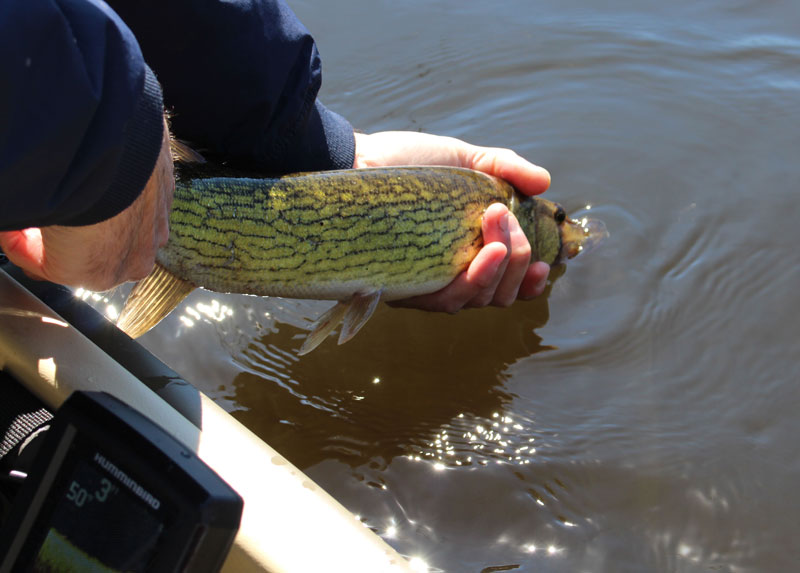
If you visit millponds like Unicorn, Smithville, or Urieville Lakes in November, you’ll see that the heavy lily pads and often the grass mats have not yet receded from the winter cold. These are ideal ambush spots for hungry pickerel, though you’ll have to keep your offering up top and weed-free. Regardless of fishing topwater or subsurface, I like to have two rigs when I fish for pickerel. The first is something I can fish fast and the other is a setup that I can fish slowly. The fast setup is to cover water quickly and find fish, often getting short-struck or hammered by aggressive fish, while the second slower method gives the more hesitant pickerel a good look and is often what gets more hits after the fish have been located. This same approach can be applied to topwater pickerel fishing.
While you would be hard-pressed to see any live frogs in November, the pickerel are perfectly happy to eat fake ones. Reeling a horny toad or other frogs with kicking legs will create the kind of disturbance that gets attention from prowling fish. I also love hooking a five-inch white paddletail with a weedless worm hook and burning it across the mats and pads. If you’re lucky you’ll see a swirl giving away the fish’s position. If you’re very lucky, they will hit the lure or even go Air Jaws clean out of the water. If you did not get the hit, this is where the second setup comes into play. Casting a hollow-body lure like a frog or mouse, or even a weedless popper and bringing it back slowly, will keep the grass off your hook while you are right in the strike zone. But bring that lure ALL the way back to the boat, because pickerel are fearless and will hit right next to you.
As the winter gets colder and the vegetation recedes, you can swap out the weedless lures for something with open hooks for better hookup ratios. This is a perfect opportunity to swap out those treble hooks for singles. Pickerel have a tendency to inhale lures, and trebles down a toothy critter’s throat is a scary prospect. Make it easy on yourself and go with the single hooks—if you are participating in tournaments, trebles usually aren’t allowed anyway. You don’t need to change where you look for the fish. The difference is that the pads are not there to snag you and you won’t come up with as much grass. Also, fallen trees and branches also offer great ambush spots.
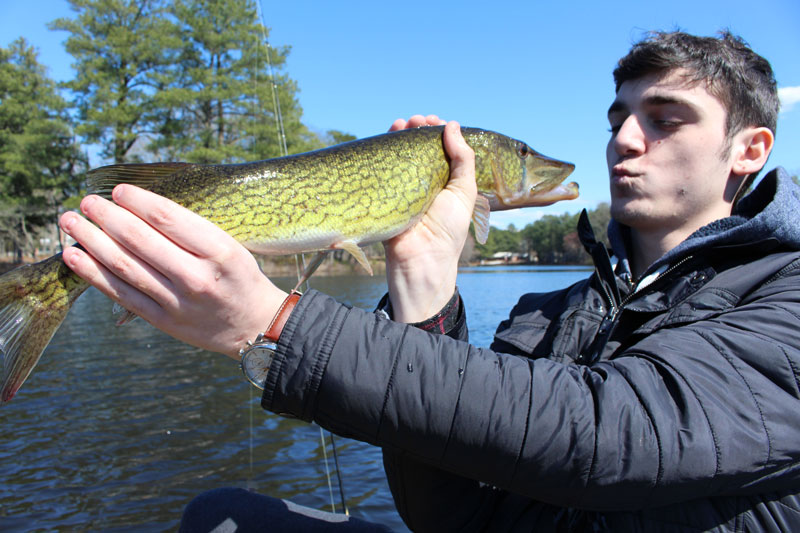
A prop bait is excellent for covering open water, while the splash of a popper will get lots of attention. In the mill ponds, I prefer using smaller lures and have fished a 90-mm plopper bait to no avail for hours, but dropping to a 75-mm or even a 50-mm, the fish suddenly turned on. And once I see some action around my bait, it’s time to throw a small popper, preferably 2.25”, with bigger pops that do not move as fast, but throw lots of water. For both lures white stands out in the stained water, but bluegill, shad, or yellow perch colors often do better. Remember, these are toothy fish: I recommend using a length of leader that is at least 30-pound test. Wire would be the best choice, because losing a lure is both disheartening and more likely with smaller models.
During the fall the fish have the cover of the pads and mats, so you can topwater fish any time of the day. However, when it’s wintertime and the vegetation has died back you’ll have much better luck on overcast days and even in steady rain. Take your pickerel fishing to the next level by bringing a few topwater lures on your next outing.
Winter Warfare
You say you want to prove your pickerel pounding prowess? There’s no better way than joining in the CCA Winter Pickerel Championship. Competition begins this month on November 1 and runs through the winter, finally closing at midnight on February 28. There’s a slew of ways to win including catching the longest stringer of three fish, the longest single fish, longest kayak fish, longest on fly, longest from shore, and more. There’s also a list of calcuttas you can join in on. There are oodles of cool prizes to win including the coveted bronze pickerels for top category winners. This is a C-P-R tournament run on the iAngler platform, and non-members who compete will get CCA membership as part of their registration. Remember people, CCA is our voice at the table when it comes to fisheries matters and the organization deserves our support! Sign up, and spend your winter pickerel fishing instead of sitting on that couch!