Presented by Sirius XM Marine

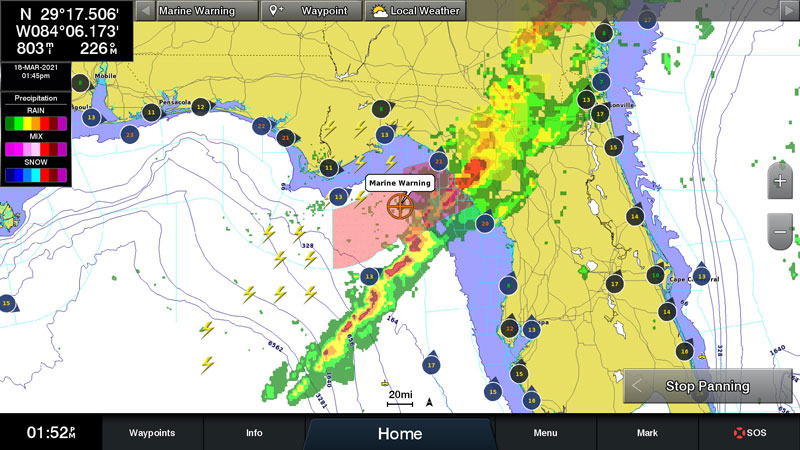
The weather was unsettled when you woke up in the dark of night but the forecast called for the wind to drop soon so you iced the cooler, filled the fuel tank, and stacked the rods in the rocket launchers. As the very first hints of daylight begin to paint the eastern horizon you and the crew prep the boat for departure, then huddle around the chartplotter and bring the SiriusXM weather overlay on-screen. You can see that the wind is falling off and will be on the transom for the ride out, the seas offshore have calmed to reasonable levels, and most importantly that the scattered thunderstorms they were calling for are tracking north and well away from your destination. You’re fully armed and ready for a day of offshore fishing—it’s time to pitch the lines and run the inlet.
Undoubtedly, you also have a pack or two of ballyhoo aboard the boat. For most of us, most of the time, ballyhoo is the dominant species in the spread. But there will be times when they don’t account for the catch, times when they’re hard to come by, and times when the use of artificials boosts their effectiveness. Initially in Part I we focused on finding the fish and last month in The Thunnus Among Us: Catching Yellowfin Tuna Part II we focused on rigging and trolling this small but critical bait. This month, we focus on the artificial lures you also need to have in the spread.
Kinetic Synthetics: Artificial Lures for Tuna
Lures fall in and out of favor with time, changing fisheries, and creative new developments made by people in the tackle industry. Through it all, however, there are some must-haves that produce wild explosions and bent rods decade after decade. Three perpetual top offerings include spreader bars and side-winders, Green Machines, and topwater plugs.
Spreader Bars, Side-Winders, and Splash Bars
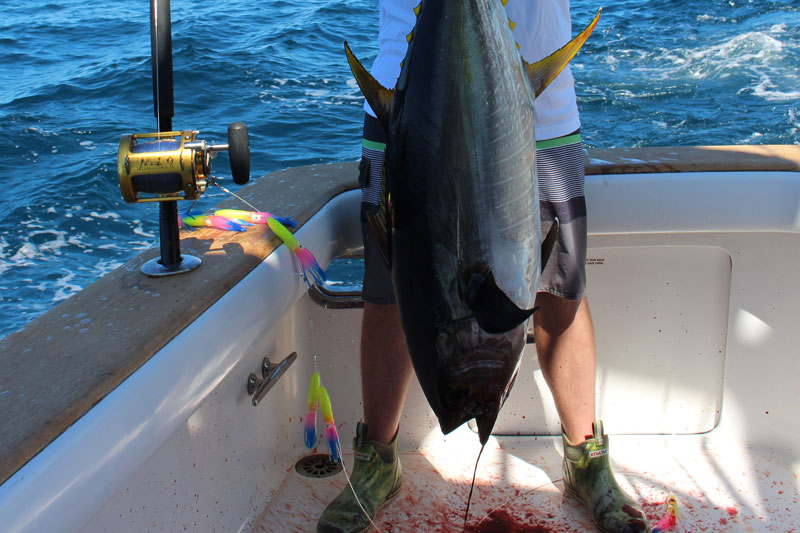
Spreader bars are those big rigs with a long arm trailing multiple daisy-chained soft plastics, usually squid. Side-winders (“Sidewinder” and “Side Tracker” are trademarked names) are a type of spreader bar with a hydrodynamic wing that pulls them off to one side of the boat or the other, helping to space out the offerings in your spread. And splash bars have small birds attached which kick up a frenzy. All accomplish the same thing: presenting a large number of teasers mimicking a “school” of bait, with a hook-bait trailing the school. Just a decade or so ago side-winders wouldn’t have been on this list and two decades ago splash bars wouldn’t have been around yet, either, but their development is a testament to the effectiveness of the original spreader bars.
TIP: When running a spreader bar it’s best to pull it from a short rigger position to get some angle in the line, and set the lure’s distance depending on where it sits when running in the ideal position: with the bar held just above the water but the baits all dragging through it.
Which is best? Ask three anglers and get three different answers. That said, all are very effective at not only hooking yellowfin, but also at bringing them up to the surface from a distance. These lures kick up one heck of a fuss, splishing and splashing as they move through the water. Choose whichever you personally like the most, but make sure you have a few of these deployed at all times.
TIP: These rigs attract a lot of attention, but don’t always get hit. Towing a camera behind the boat proves that plenty of fish will eyeball a bar without taking a swipe. Take advantage of this by running a natural bait slightly behind it (10’ or 12’ back and slightly off to one side is ideal). Often a fish that isn’t fooled into eating the plastic will spot and attack the natural bait after being drawn close by the bar’s fuss.
Green Machines for Tuna Fish
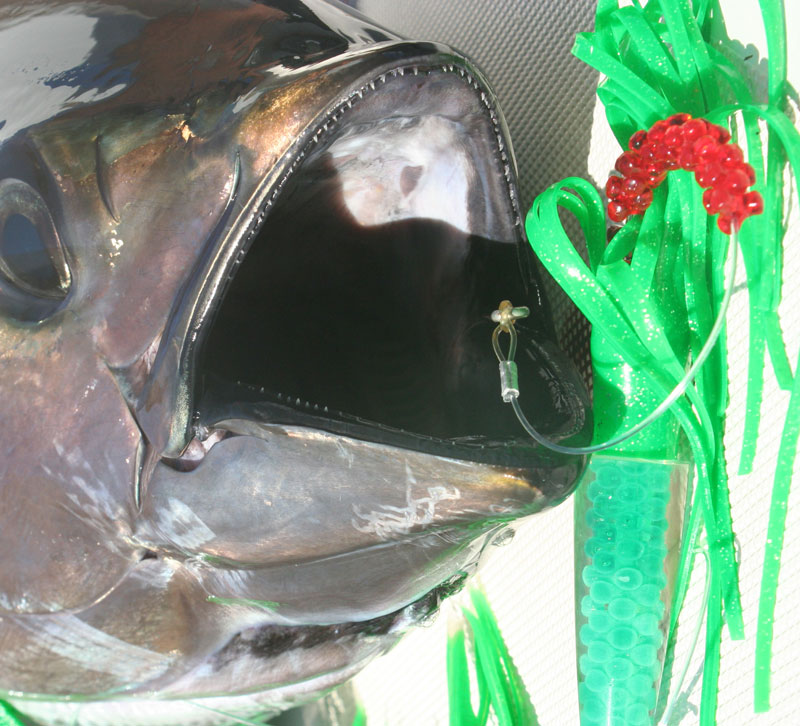
Green Machines are a classic lure that’s withstood the test of time. There are many imitations from many brands, any of which can be effective. Essentially, they’re green squid-like bullet-heads which are usually most effective when trolled bare. Yes there are other colors, and yes sometimes those other colors work best; yes sometimes people rig a ballyhoo on a Green Machine, and yes that sometimes catches fish. But as a general rule of thumb, lime green run bare rules.
TIP: Most anglers rig Green Machines on 150- or 200-pound test, which works just fine. However, always keep one rigged on 80-pound test handy. The lighter line allows the lure to dart and weave through the water with more action, and when the bite gets tough, if you deploy the light rig you’ll boost your chances of tempting a fish into attacking. Just remember to adjust the drag accordingly.
Green Machines can be pulled all by their lonesome, and they work great. Many anglers like to rig them as the hook-bait on a spreader bar or daisy chain, which can also be fantastically effective. And many use them to tie up a Green Machine/Bird rig, where a bird trails three teaser Green Machines followed by a final hook-bait.
TIP: Whenever longfin tunas are around deploy multiple Green Machines. Much of the time they will choose this lure over anything else in the water.
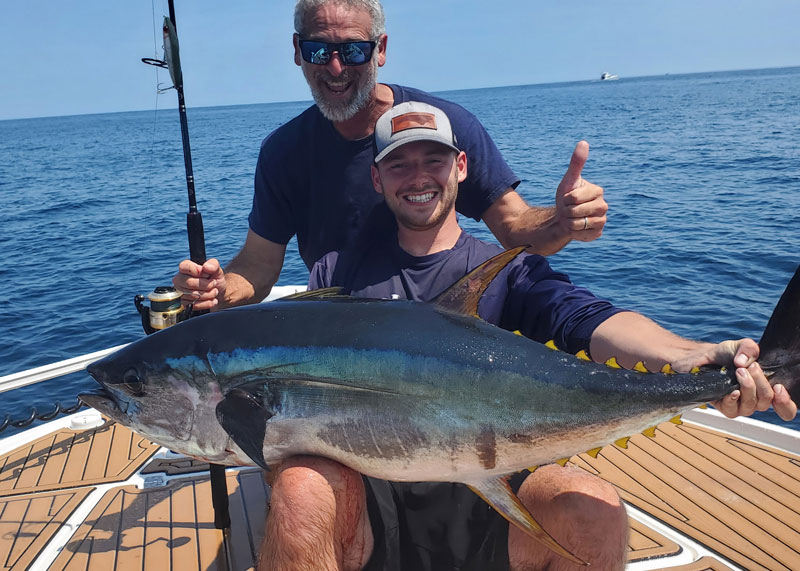
Topwater Plugs for Tuna
Wait a sec — you can’t exactly troll topwater plugs, can you? Well, you can, but it’s not likely to be effective and that’s not why we want these lures aboard. If and when you spot tuna busting water on relatively small bait, they can be hyper-focused and may completely ignore your trolled offerings. When this happens, the best way to get a fish on the line is to come within casting distance and hurl out a topwater plug.
TIP: Any old topwater will not cut it, because yellowfin will demolish most plugs designed for inshore gamefish. It has to be uber-beefy, with 4X or 5X hooks and through-wire construction.
When you spot yellowfin busting water the natural inclination is to continue trolling around them, which may produce a strike. But when you’ve spent a few minutes asking yourself why you can’t buy a bite when those magnificent beasts are exploding to your left and to your right, wind those lines up post-haste and start flinging plugs.
TIP: Carry the heaviest castable rod you have, to go along with that lure. Pitch out a topwater on a 20-class rod you use for bailing mahi, and you’ll be in for an hours-long fight with a low probability of success.
The When and the Where of Tuna Fishing
How will you know when and where to tilt your spread more towards artificials and less towards rigged baits? While trends and patterns should be given priority, every day on the ocean is a new day and it’s always smart to mix things up until you figure out what’s working best at any given time. That said, artificials have one advantage over rigged baits: you can troll much faster without worrying about them swimming funny or ripping apart. With a spread of artificials you can move along at eight or even nine knots, and most of the time can mix in a couple of rigged baits without working too hard. Try that with a full spread of naturals and you’ll be constantly replacing ballyhoo, if you can even get them to run right in the first place.
Let’s say you have SiriusXM Marine, so you already have all the weather intel you need to know when it’s safe to leave the dock and which way to head to dodge those thunderstorms. Add in Fish Mapping, and now you also have the most current sea surface temperature (SST) temp charts right on the chartplotter screen. That means you can run right to the edge of a break or eddy, but you’ll still probably want to hunt around for a bit to locate the strongest temp changes and water barriers. In this scenario setting lures is advantageous, because you can troll faster and cover more ground as you search. When you locate the peak break in the area you can slow up a bit and mix up the spread. Same goes for sticking with artificials when you locate fish that are moving fast, or are playing tag with a school of porpoises that’s being shadowed by yellowfin.
Sirius Action
This is the final installment of The Thunnus Among Us, brought to you by SiriusXM Marine. They’ve sponsored this offshore angling section because these folks are anglers, too, and they believe (correctly) that we’d all be safer and better off with the latest weather data and sea condition intel on our chartplotters. We’ve used their systems for years at a time, and we agree. Having SiriusXM at the helm is a serious boost of the safety margin—and in the long run will help you catch more fish, too.