Whether you’re fishing a shoreline or up a channel drop off, casting jigs can be a big payoff while kayak fishing. I typically have at least one of my rods rigged with a jig no matter the target species. It could be a small bucktail for crappie, a jig dressed with a four-inch paddletail for largemouth bass, or a big one-ounce jig while out hunting stripers.
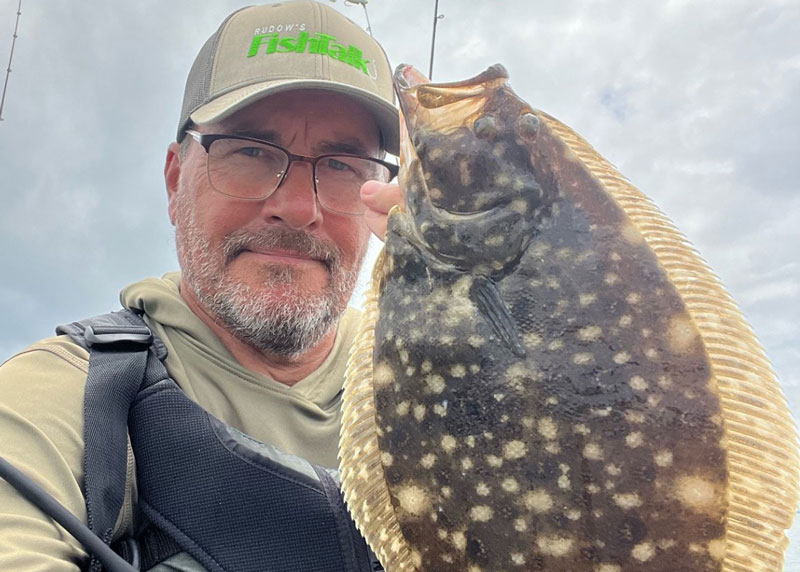
I carry a variety of jigs, small for smaller species and larger jigs for bigger fish, but the size of the jigs is also based on the season. For example, in the spring the biggest jig I carry on my kayak, fresh or salt water, isn’t larger than half an ounce. Late summer or autumn I carry up to one ounce and in winter up to 1.5 ounces. Keep in mind that baitfish grow larger throughout the season.
There are a few advantages of jigging from a kayak as compared to a boat. The first is that you’re somewhat forced to fish the water you can reach, slowly picking it apart, unlike a powerboat where you can just get up and move across the lake or to the far side of the Chesapeake. You’d be surprised how many fish you leave behind by jumping to another location. Another advantage is the ability of stealth mode, moving quietly across the water. Yet another is the ability to reach fish in very skinny water. And finally, you can slow-troll jigs with paddletails effectively.
While on the Bay and tributaries targeting speckled trout, striped bass, and redfish, I’ll typically troll a four-inch paddletail when I move from one location to the next. I like to troll at around two mph in two to eight feet of water. While on freshwater this is a good tactic for many species as well.
Outside of trolling, I use micro jigs for panfish. I will drop a tandem rig of micro jigs with a bell weight at the bottom of the rig straight down and off the side of the kayak. I then let the natural drift and bounce of the boat control the action. The slow and natural movement presentation often works best. I will at times tip the jigs with redworms or Fishbites bloodworm, too.
When fishing a shallow flat, look for darker water where the water drops to a deeper depth and line up the kayak so you can drift along or across the drop. Cast offerings up onto the flat and work the jig across it and down the drop off. If there are no takers reverse the order, casting into the deeper water and working the bait up the slope of the drop. With both scenarios try various presentations; swim the jig, bounce the bait back to the kayak, and try pausing so it hits bottom. You will need to find a presentation that works for any particular day.
Fishing a flat out of a kayak is probably my favorite way to fish jigs. I start by casting jigs past patches of grass, bringing the bait over the top, then dropping the bait into open spaces within the grass or at the edge of the grass. Look for divots, deeper water, or a trough, because fish use all of these for staging and traveling.
Using the slowness, stealth and quiet of a kayak has its advantages while using jigs. And remember to take the cast—with a jig—the next time you’re out there.
-By Eric Packard