Coastal Mid-Atlantic Fishing Report, September 24 Update:
Fall fishing is heating up along the coast, with big red drum, mullet, spot, kingfish, and other species showing along the beaches before this week’s nor’easter put the brakes on things. Offshore boats have been tied to the dock, but the inshore and back-bay fisheries are still offering plenty of options while anglers wait for the ocean to settle.
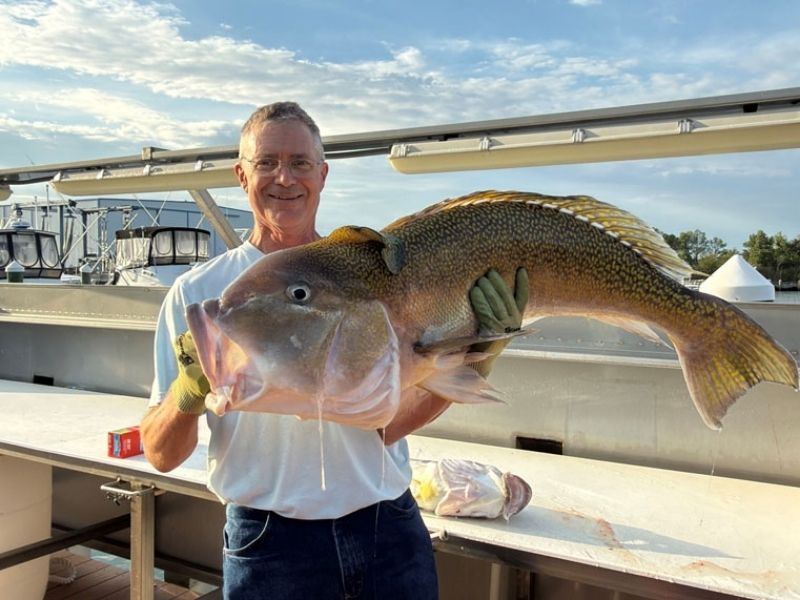
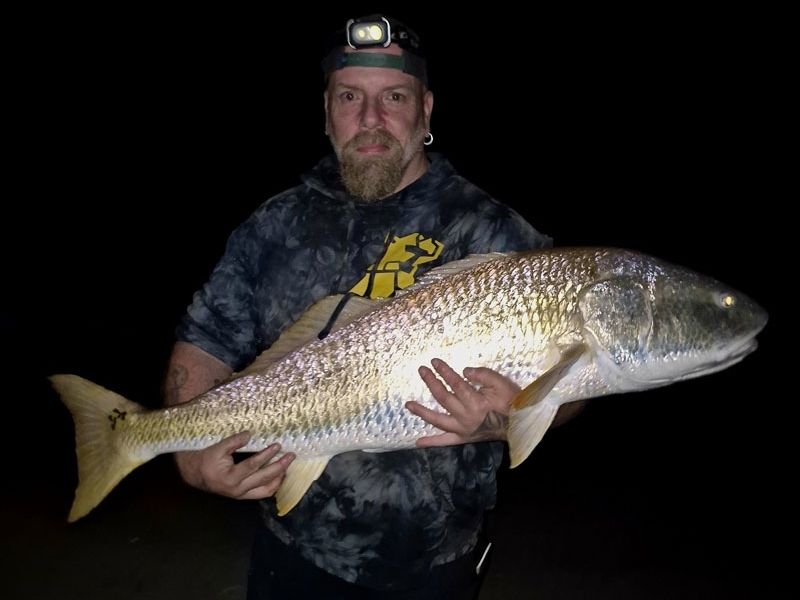
Dave Moore of Shark Whisperers let us know that the fall action on Assateague has heated up the past week, with mullet now migrating along the beach. Some big bull redfish have arrived and a 47” and a 48” hit his baits in recent days. He’s also seen some baby black drum , speckled trout, big spot, and big kingfish move in. Sharks are active as well, including blacktips, spinner, and sandbar sharks. On the flip side of the coin, rays have also gotten thicker. The surf action was getting red hot early in the week, but the current Nor’easter off the coast has put a hold on fishing. The OSV on Assateague Island has been closed this week due to eight-to-12-foot surf conditions that are making it dangerous to be on the beach right now. It will likely be a few more days before the swells subside and the beach open back up, but the drum run should pick up right where it left off with fish cruising the troughs looking for a meal.
The offshore fleet has been largely tied to the dock this week as a strong coastal storm has brought persistent northeast winds and very rough seas to the Maryland and Delaware coast. Current forecasts are calling for gale-force winds and seas reaching well into the double digits offshore, making runs to the wrecks and canyons unsafe and impractical for most boats. The rough weather has also stirred up the inshore waters, so anglers may need to give conditions some time to settle before the offshore bite can be evaluated again. The good news is that forecasts call for winds and seas to gradually ease early next week, potentially giving the fleet an opportunity to get back on the water if the ocean settles as expected.
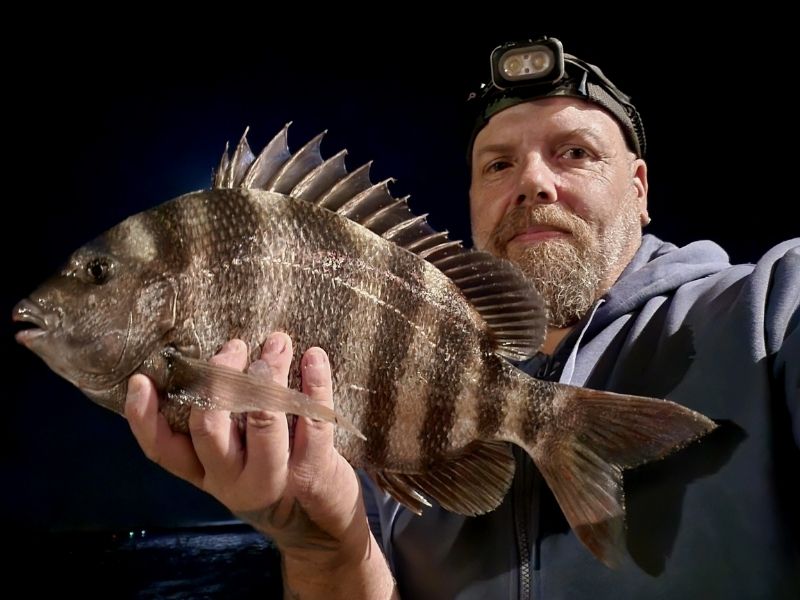
With the offshore fleet sidelined by rough weather, anglers can still find plenty of action in the inlets and back bays, where late-season flounder remain a solid target. Flounder are concentrating around deeper channels, drop-offs, creek mouths, shoals, and areas with moving water, and drifting or slowly bouncing bucktails and soft plastics tipped with Gulp! or strips of squid along the bottom is a proven approach. Around the Ocean City Inlet, sheepshead and tautog can be found tight to jetty rocks and bridge structure on live sand fleas or crab baits, while croaker, spot, and an occasional bluefish can provide additional action on bottom rigs and small jigs. As the water continues to cool, keep an eye on the deeper channels and current seams, which can concentrate bait and give predators an easy ambush point.
Coastal Mid-Atlantic Fishing Report, September 18 Update:
The coast is still holding onto plenty of summertime action, but the first hints of fall are starting to creep into the picture. From the surf and back bays to the offshore grounds, anglers have a wide variety of options, with flounder, surf-favorites, sharks, rays, and a mix of pelagic species keeping things interesting. A few new arrivals are starting to show, and if the weather cooperates, the coming weeks could make for a particularly fun time along the coast.
Dave Moore of Shark Whisperers says that for the most part he’s still seeing a common summertime bite on the beaches of Assateague, with the bulk of the action coming from sharks, rays, and panfish including spot and kingfish. However, small speckled trout and some pompano have begun showing up, signaling that a fall bite is right around the corner. Redfish should begin showing back up at any time and a couple have already been reported from the Virginia Beach area. Fishing with bloodworm, Fishbites bloodworm, or squid bits will get the smaller fish biting, and cutting fresh-caught spot into chunks and sending it back out on doodlebug or fishfinder rigs will give you the best shot at bigger game. Coastal Correspondent Emaritus John Unkart checked in to let us know he made it out onto the beaches of Assateague this week and found a good bite for panfish including some nice spot big enough for the frying pan, along with small kingfish and flounder. Fishbites bloodworms did the trick.
Sea Hawk Sports Center reports that the seaside has seen some increase in flounder action recently. Most of the fish from angler reports are still short of the 17.5” minimum, but there were also some more keepers around during high tides. Along with the flounder, there have been croaker and small speckled trout in the back bays. We have also heard that there are some shrimp showing up on the mud flats in the back bays behind Chincoteague. If you have a cast net, head out during low tide and make some throws around the flats, and you should be able to find some eater-sized shrimp. The shrimping can be even better at night as more of them tend to move into the shallows. The shrimp should be up and down the coastal bays of the Eastern Shore over the next few weeks.
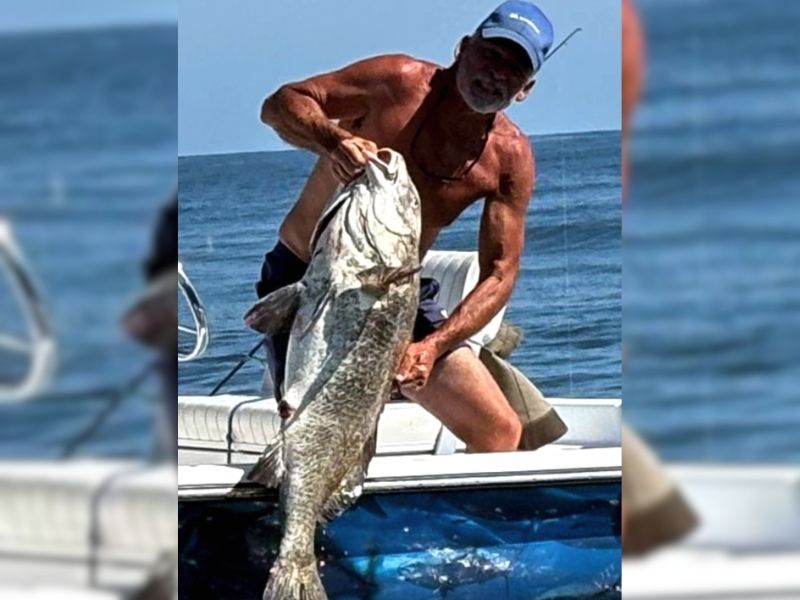
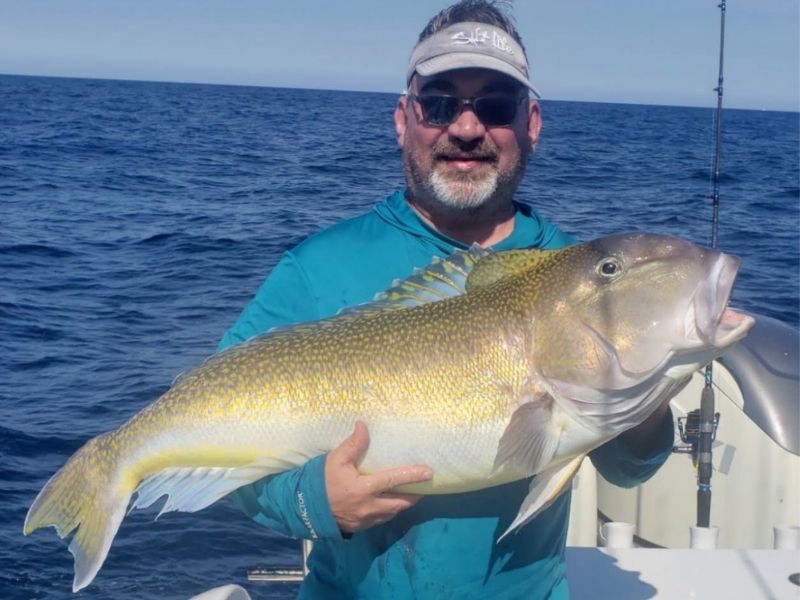
Recent Fish In OC reports point to a strong mix of flounder, sea bass, mahi and billfish opportunities on the offshore grounds. Captain Chris Mizurak of The Angler has been enjoying consistent action for sea bass, flounder, and mahi. Flounder remain one of the most dependable offshore options, with anglers working wrecks and reef structure with bucktails, jigs and fluke-style rigs, while sea bass are holding on the same structure and can be targeted with baited hi-low rigs or small jigs. Mahi are still roaming around floating structure and debris, but the nearshore mahi fishing opportunities will begin to wind down as water temperatures fall. Deep-dropping for blueline and golden tilefish also remains an option on the deeper grounds. In the cool catch department, a subscriber flounder fishing off Fenwick Shoals with 15-pound gear and a three-inch Gulp! was surprised when a big black drum jumped on the line. The fish put up a fight, but was subdued. You never know what will strike next out there!
Coastal Mid-Atlantic Fishing Report, September 10 Update:
Dolphin remain at bass pots on the inshore grounds, while sea bass and flounder are also thick at the wreck and reef sites. Offshore, tunas have been a bit tough to come by recently but billfish are around in impressive numbers and are more than filling in the gap. On the beach it’s mostly panfish, but some larger fish are showing up as well, and in the coastal bays flounder and croaker are the main bites.
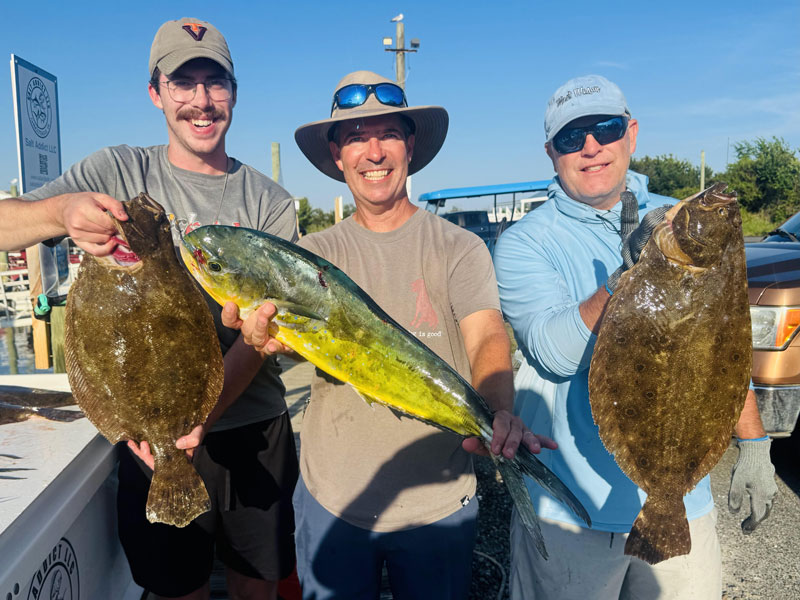
We had subscribers report good mahi action at inshore bass pots over the holiday weekend running from Delaware down through the Virginia ports. Captain Cook of First Light Charters checked in from Delaware, and said he’s seeing lots of inshore mahi up north. They’ve been getting limits many trips, catching them on both light tackle and while fly fishing, then they’re getting flounder to cap things off. An angler fishing out of Chincoteague said they started by bailing dolphin at bass pots, caught a limit, then worked on a limit catch of flounder. He also noted that the inshore dolphin have grown up a bit and the average fish is three to five pounds, noticeably nicer than he was seeing previously. Captain Monty on the Morning Star is reporting a mix of sea bass, flounder, and some inshore mahi as well, though many flounder being caught are on the small side and there are lots of throwbacks per keeper. He also mentioned that a south current came around one afternoon this week and made for a tough bite.
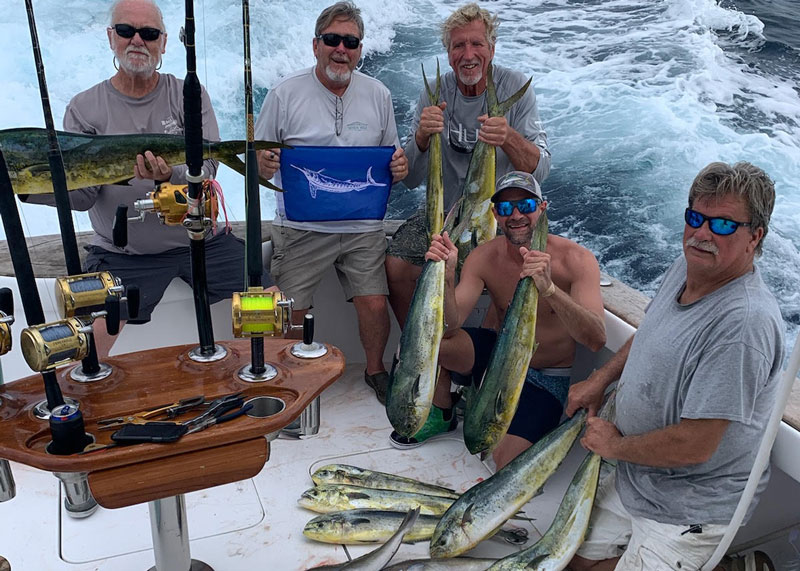
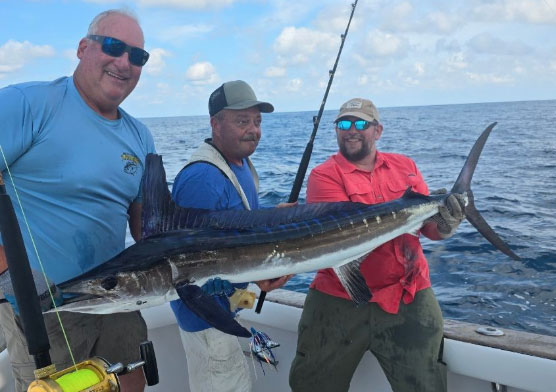
Offshore a subscriber fishing out of Wachapreague reported hot action bailing for the dolphin at the polyballs and an excellent bite on bottom for blueline tilefish; squid was the killer bait. Trolling was slow but they did pick up a nice white marlin. Another boat fishing in the vicinity of the Washington reported raising and hooking several whites, though they didn’t manage to get any up to the boat. Farther south, boats looking for billfish out of Virginia Beach are encountering a nice run of sailfish in addition to the whites, with some reporting a dozen-plus bites in a day. One angler also reported catching a roundscale spearfish last weekend, and several blue marlin were also released this week.
An angler fishing at Chincoteague inside the inlet fished an outgoing tide and caught five flounder along with missing several bites. Most of the fish were around 16” up to 18”. Dave Moore from Shark Whisperers said he hasn’t been fishing much lately due to an injury, but the last time he made it to the OC inlet he did catch a few sheepshead in the 20” range. He also said he’s looking forward to the fall run of redfish on the beach at Assateague, which may not yet be in full swing but does appear to be beginning—a reader checked in right after the holiday weekend with a pair of reds taken in the suds, both of which were over the slot by several inches. The surf bite has picked up along the Virginia Beach oceanfront in general and anglers fishing the Virginia Beach Fishing Pier enjoyed a steady bite this week for Spanish mackerel, bluefish, and ribbonfish. One day there were schools of all three species mixed together around the pier willing to hit metal jigs, Gotcha plugs, and other artificial lures.
Inside the inlet in OCMD, FishInOC is reporting some keeper flounder near the Rt. 50 bridge. There are also still good numbers of eating-sized croaker in the OC back bays, including for anglers fishing off Stinky Beach with squid strips, bloodworm, or Fishbites bloodworm. Puffer fish and small sea bass are also plentiful.
Coastal Mid-Atlantic Fishing Report, September 4 Update:
Offshore fishing remains strong, with flounder producing excellent numbers on wrecks and reefs while mahi are beginning to rebound around the bass pots. White and blue marlin are also becoming more consistent offshore, with yellowfin tuna mixed in. Closer to shore, sheepshead and croaker are available around the Ocean City Inlet, while the fall red drum migration is beginning to take shape along the beaches.
Capt. Monty on the Morning Star reports that some cool water put a crimp in the inshore mahi bite recently, but the water temps have now come back up, and he expects that action to crank back up (hopefully) into September. He also noted that some reef trips have been producing even more flounder than sea bass recently. The mahi action seemed to pick up this week as we saw reports from a few boats that found limits of them from the bass pots. A subscriber checked in after fishing out of Chincoteague and says that he heard that a few swordfish had hit the deep-dropped baits, so he gave it a shot this week but came up blank. Fortunately, the flounder were biting strong at the wrecks, and they loaded up on them, along with catching some mahi around the bass pots. The offshore flounder fishing has been excellent this summer, and there aren't any signs of it slowing down yet. The crew of the Fish Bound put together a 52 fish boat limit this week, which has been the norm on many trips. Fish In OC reports that the offshore boats are starting to see more opportunities for marlin, and some boats are having really good days. The Boss Hogg was one of the boats that enjoyed excellent fishing this week, catching and releasing nine white marlin, a blue marlin, and also boxing a yellowfin tuna.
Dave Moore of Shark Whisperers says there are some sheepshead at the OC inlet, but small sea bass “almost make things impossible.” He mentioned that he hadn’t been out for the early September reds on Assateague yet, but that action should be cranking up soon. Other anglers fishing the rock jetties at the Ocean City Inlet are also catching some sheepshead. There are also some keeper croaker around the inlet, beaches, and back bays, so baiting up some bottom rigs with squid, shrimp, bloodworms, or Fishbites is a good bet for steady action. There are plenty of undersized flounder in the back bays right now with some keepers in the mix, but the ratio will greatly favor the shorties. Anglers are still finding success from Ocean City down to Wachapreague. The flounder action around the mouth of the Chesapeake Bay should pick up steam this month.
As water temperatures begin to fall into the 70s and eventually the 60s, red drum start schooling along Maryland and Virginia’s coastal beaches as they migrate south. The key to finding them from the surf is locating the troughs, cuts, and deeper pockets between sandbars, with the trough immediately off the beach often holding fish as they move in and out with the tide. During higher tides, it’s worth keeping one bait farther out over or beyond the outer bar, while lower tides can reveal productive holes and channels that concentrate feeding fish. A little wave action is generally a good thing, as churned-up water gives drum confidence to move into the shallows and feed. Fresh cut bunker, spot, mullet, croaker, or peeler crab fished on a fish-finder rig are proven producers. The fish can feed throughout the day, although dawn, dusk, and nighttime are especially worth targeting. In Maryland, the recreational red drum limit is now three fish per person per day with an 18” to 26” slot. Virginia regulations also allow three red drum per person per day, with an 18” to 26” slot. Therefore, the large bull reds encountered along the beaches during the fall migration must be released.