Tangier, Pocomoke, and Lower Shore Fishing Report, October 2 Update:
The Tangier region really seems to have embraced the fall transition, with cooling water putting a wide variety of fish on the feed. Striped bass, perch, speckled trout, and bottom fish are all contributing to a mixed bag, while bull reds are making one of their final appearances before heading south. The next few weeks should offer some excellent shallow-water opportunities as bait and predators settle into their fall routines.
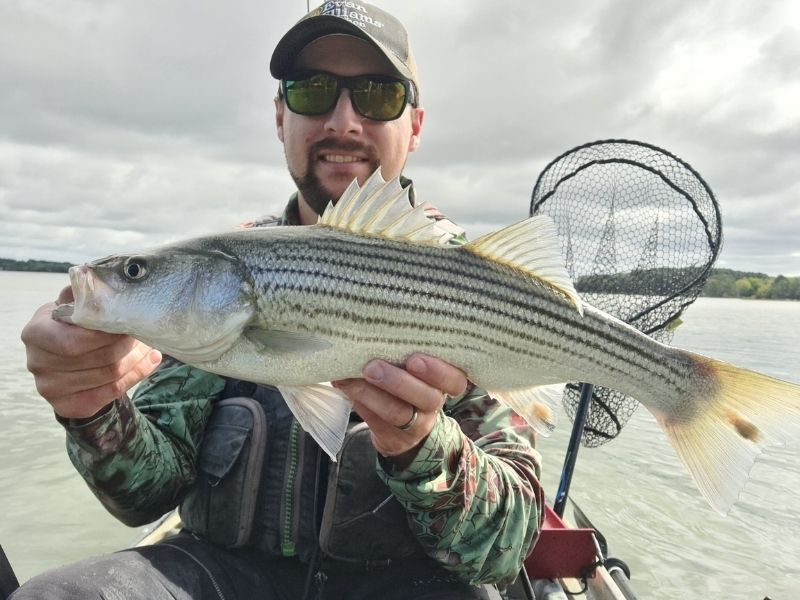
A subscriber sent in a lengthy report after spending a few days fishing on the lower Eastern Shore of Virginia. On day one, they fished a tidal creek during an incoming tide and found that the water was cold (63 degrees) the day after the Nor’easter passed. He focused his efforts on deeper channel areas and was struggling to find bites until he found the “magic dock” (two actually) which featured old pilings, strong current, and oyster bottom in around 10 feet of water. The rockfish were stacked up in the area, and he ended up catching 17 rockfish and two small speckled trout. About half of the rockfish were slot-sized, and the others were under the slot. On day two, he spent the day fishing around Fisherman’s Island. The tide was extremely high and most of the marshes that are usually high and dry were totally flooded. Fish were not widespread, but he found a couple schools of small trout in the 10” to 13” range on some flats and channel edges up in the marshes. He caught 27 small specks and two other anglers did about the same. On day three, they headed to the concrete ships at Kiptopeke. Unfortunately, the fishing “sucked.” He and his friends spent several hours fishing with bait around the ships and only caught a handful of small junk fish, including pigfish, lizardfish, toadfish, silver perch, sea bass, and kingfish. They also tried jigging for flounder using Gulp!, and only caught one undersized flounder. They talked to other anglers on the water who were having the same kind of luck. The final day (yesterday) they focused on sheepshead at the CBBT with Southern Reels Sportfishing, and saw plenty of fish on the Livescope, but only a fraction were willing to bite. Captain Jesse mentioned that the fish were in different spots than they had been before the storm. They boated four nice fish up to 24" and lost a few more boatside. It’s hard to say why the fishing was so tough, but the shake up from the Nor’Easter surely may have had something to do with it.
Sea Hawk Sports Center reports that the cooling waters have triggered fish to start feeding more heavily in the river mouths that lead to the Tangier Sound, which are producing a good bite for rockfish, white perch, croaker, spot, and even some keeper weakfish. The rockfish are relating to deeper channels in creeks and marsh points where there are current rips. Bottom fishing at the mouths of the rivers has been very good for anglers using peeler crab, but soft plastics and small spinners are also working well for rockfish and perch. Perch are keying in on small two-inch soft plastics on 1/16th to 1/8th ounce jigheads. Cooler daytime temperatures and water temperatures in the 60s have offered up an excellent topwater bite for the rockfish throughout most of the day. The bull red drum are still running along the shoals of the Eastern Shore from the Pocomoke Sound down to Cape Charles. These bull reds tend to move into the shallows again for a few weeks before making their departure from the Bay, so there is a chance to run across them over the grass beds in both the Tangier and Pocomoke. Small speckled trout have also flooded the grass flats and tidal rivers in this region. The bulk of the trout are in the 10” to 13” range, but a few keepers have also been tempted into the net. Popping corks with shrimp soft plastics or small paddletails are very effective for specks and also work well for hungry rockfish or reds cruising the shallows.